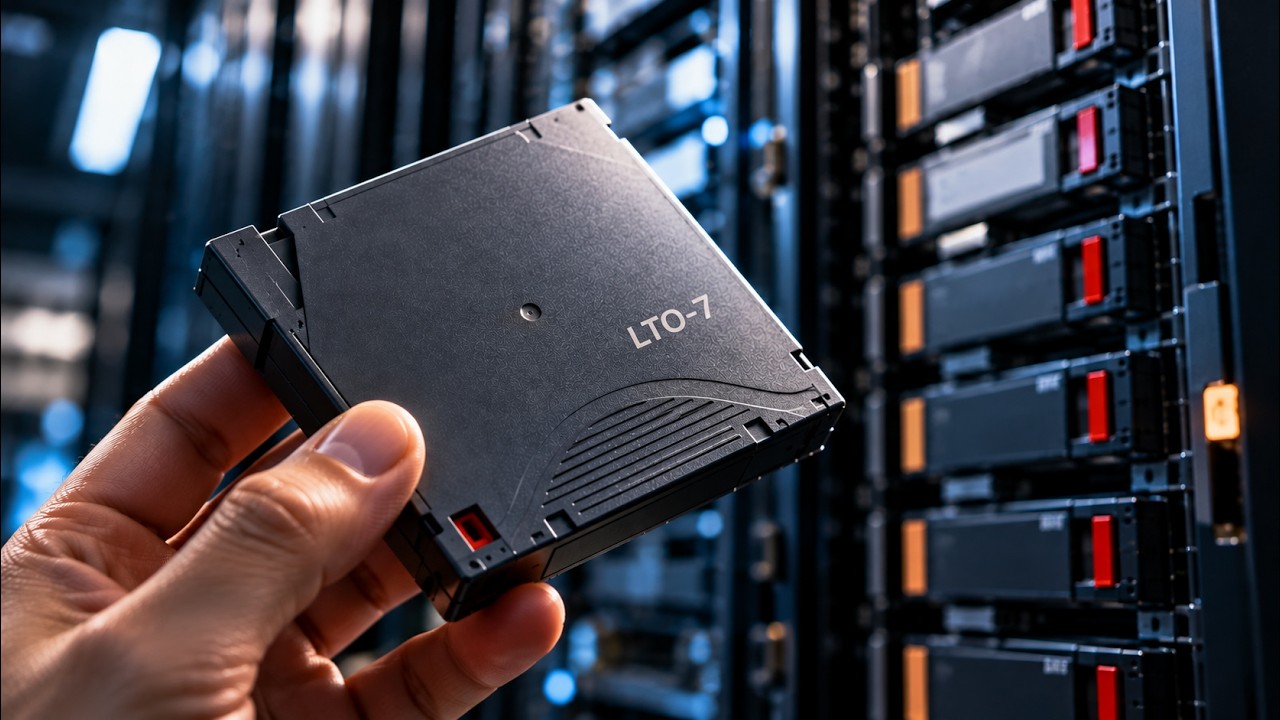
LTO-7 tape remains widely recognized in enterprise backup and archive environments. Even as organizations move to newer LTO generations, many businesses still operate LTO-7-compatible infrastructure or maintain older tape libraries for long-term data retention.
If your company has surplus LTO-7 tapes, don’t automatically assume they belong in a recycling bin. Depending on quantity, condition, brand, media type, and current market demand, used LTO-7 cartridges can still carry real resale value.
At We Buy Used IT Equipment, you can submit your used LTO tape inventory for evaluation, along with tape drives, tape libraries, servers, storage equipment, hard drives, and other surplus enterprise IT assets.
What Is LTO-7 Tape?
LTO-7 is the seventh generation of Linear Tape-Open magnetic tape storage technology, built for enterprise backup, archiving, disaster recovery, and long-term data retention. A standard LTO-7 cartridge provides:
- 6 TB native capacity
- Up to 15 TB compressed capacity
- Support for enterprise backup and archive environments
- Compatibility with LTO-7 and later-generation drives
That compressed figure assumes a 2.5:1 compression ratio — actual results depend on the type of data you’re storing.
Is LTO-7 Still Used?
Yes. Even with newer generations available, many organizations keep LTO-7 infrastructure running, for reasons like:
- Existing tape libraries still work fine
- Large archives remain stored on LTO-7 media
- Migration costs can be significant
- Older backups need to stay accessible
- Regulatory or contractual retention periods haven’t expired yet
- Current backup workflows already meet business requirements
This ongoing installed base is exactly what keeps demand alive for compatible LTO-7 media and hardware.
Are Used LTO-7 Tapes Worth Money?
Often, yes. Several factors shape the resale value of any given LTO-7 lot.
Quantity
Bulk quantities matter more to commercial buyers than a handful of loose cartridges. If your company has hundreds or thousands of LTO-7 tapes, it’s worth requesting an evaluation before you consider recycling.
Condition
Condition affects value directly. Cartridges typically fall into categories like:
- Factory sealed
- New, open-box
- Used
- Barcode labeled
- Hand labeled
- Loose
- Stored in original cases
- Stored in bulk containers
Brand
Common LTO-7 media brands include IBM, HPE, Fujifilm, Quantum, and other established enterprise manufacturers.
Cartridge Type
LTO-7 cartridges come as either standard rewritable media or WORM (Write Once, Read Many) media, which is built for applications where stored information can’t be overwritten. Identify which type you have when requesting a quote.
Current Market Demand
Like other used IT equipment, LTO-7 pricing shifts with supply, demand, and how much compatible infrastructure remains in service. LTO-7 tends to hold value because plenty of organizations still run compatible drives and libraries.
Who Buys Used LTO-7 Tapes?
Companies that specialize in used IT equipment, enterprise storage, and data center assets purchase LTO-7 tapes regularly. Potential sellers include:
- Data centers
- Corporate IT departments
- Healthcare organizations
- Financial institutions
- Government organizations
- Universities
- Managed service providers
- IT asset disposition companies
- Electronics recyclers
- Backup service providers
If you’re looking for who buys used LTO tapes more broadly, we cover the full picture ina separate guide. In the meantime, organize your inventory before requesting a quote — it speeds the process up considerably.
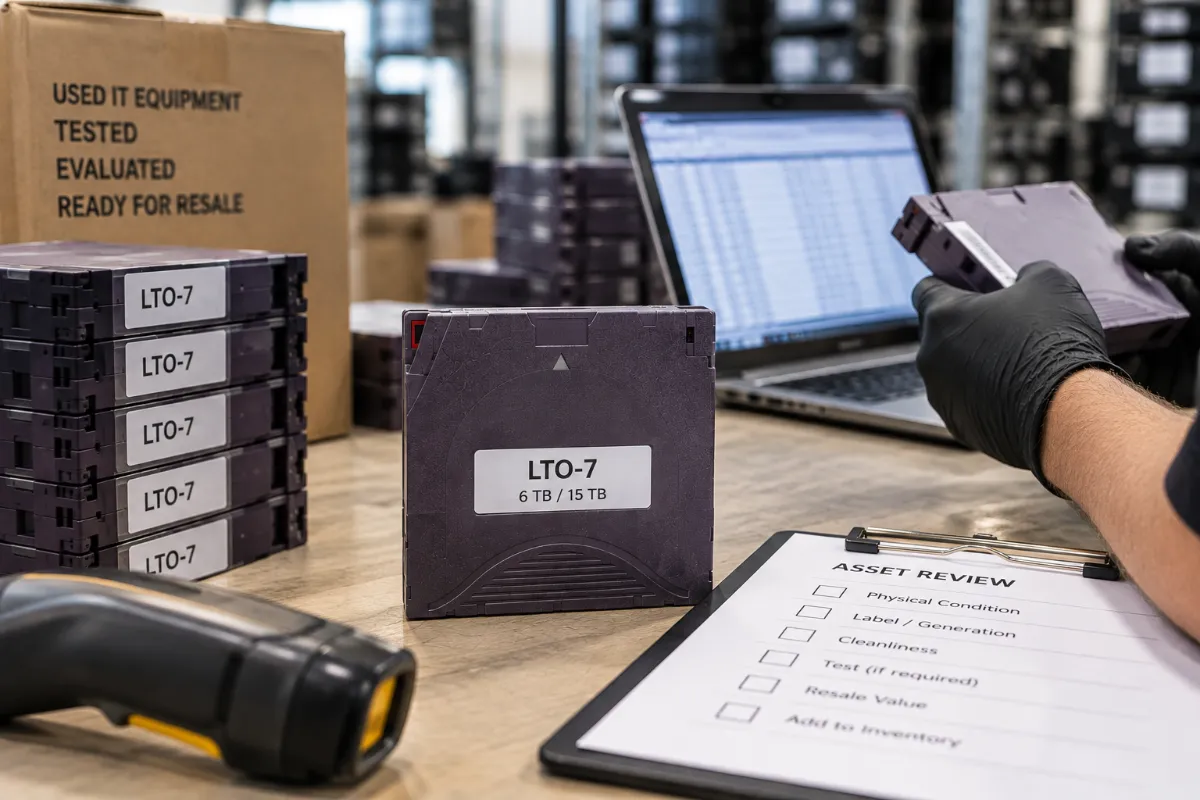 What Information Should You Provide When Selling LTO-7 Tapes?
Share as much of the following as you can:
- Generation: LTO-7
- Brand: IBM, HPE, Fujifilm, Quantum, or another manufacturer
- Quantity: Approximate total cartridge count
- Condition: New, sealed, used, labeled, or loose
- Media type: Rewritable or WORM
- Location: Where the inventory is stored
- Packaging: Original cases, boxes, storage trays, or bulk packaging
- Photographs: Images of the tapes, labels, boxes, and pallets
Large inventories evaluate faster when you group cartridges by manufacturer, type, and condition ahead of time.
Can LTO-8 Drives Read LTO-7 Tapes?
Yes. LTO-8 drives support both LTO-7 and LTO-8 media, which is one reason LTO-7 cartridges stay relevant even after an organization upgrades from LTO-7 drives to LTO-8 infrastructure. If you still maintain historical LTO-7 backups, you may need compatible media, drives, and tape-library equipment for a while yet.
Can LTO-9 Drives Read LTO-7 Tapes?
No. LTO-9 drives support LTO-8 and LTO-9 media only, so an organization with an LTO-7 archive can’t simply insert those cartridges into an LTO-9 drive. This limitation matters a lot when you’re planning a migration from an older tape environment. If you’re moving beyond LTO-8, you’ll either need to retain compatible legacy drives or migrate the data off older LTO-7 media entirely. For the full compatibility picture across newer generations, see our LTO-8, LTO-9, and LTO-10 comparison guide.
What Is LTO-7 Type M?
LTO-7 Type M, sometimes called M8, refers to specially initialized LTO-7 cartridges that deliver higher capacity when used in compatible LTO-8 drives. Type M media provides approximately:
- 9 TB native capacity
- Up to 22.5 TB compressed capacity
Type M has specific compatibility requirements, so identify it clearly when evaluating your inventory — not every LTO-7 cartridge qualifies as Type M media.
What’s the Difference Between LTO-7 and LTO-8?
The biggest difference is capacity:
| Generation | Native Capacity | Compressed Capacity |
|---|---|---|
| LTO-7 | 6 TB | 15 TB |
| LTO-7 Type M | 9 TB | 22.5 TB |
| LTO-8 | 12 TB | 30 TB |
LTO-8 doubled LTO-7’s standard native capacity. That said, backward compatibility between the two generations means you can keep using LTO-7 cartridges even after upgrading to LTO-8 drives.
Is LTO-7 Obsolete?
LTO-7 is an older generation, but “obsolete” doesn’t mean worthless or unusable. Plenty of enterprise IT environments stay in service for years after newer technology arrives. An organization might keep using LTO-7 simply because the infrastructure still works, its archives already live on LTO-7 media, or migration isn’t economically justified yet.
From a resale perspective, the more useful question isn’t whether LTO-7 is “outdated” — it’s whether there’s still secondary-market demand for your specific inventory. That depends on quantity, brand, condition, type, and current market conditions. If you’re wondering more broadly whether old LTO tapes are worth money, we break that down in detail.
Should You Recycle Old LTO-7 Tapes?
Recycling makes sense when tapes have no practical reuse or resale value left. But don’t recycle data-bearing media without addressing data security first. Work through these questions before you decide:
- Does the media contain sensitive information?
- Is that information eligible for disposition?
- Does the media still have resale value?
- What sanitization requirements apply?
- Does company policy require physical destruction?
- How will you document the final disposition?
For a full walkthrough of this decision process, see our LTO tape recycling and disposal guide.
Should You Destroy LTO-7 Tapes?
Physical destruction may be necessary in some situations, but it eliminates any chance of resale or reuse. Determine your required sanitization outcome first, based on factors like:
- Data sensitivity
- Internal security policy
- Contractual obligations
- Regulatory requirements
- Intended disposition
- Risk tolerance
NIST SP 800-88 Revision 2 provides the current federal guidance for organizations building a media-sanitization program. Make the security decision before you choose a final physical disposition method — not the other way around.
Can LTO-7 Tapes Be Degaussed?
Since LTO-7 uses magnetic storage media, degaussing can work for certain sanitization scenarios. However, degaussing typically renders the cartridge unusable afterward. If you want to preserve potential resale or reuse value, confirm whether degaussing is actually the right approach before you proceed — it may eliminate options you’d rather keep open.
What Should Companies Do With Large LTO-7 Inventories?
Handle large inventories systematically rather than all at once. Here’s a process that works:
- Inventory the tapes. Separate cartridges by brand, cartridge type, condition, WORM or rewritable status, and standard LTO-7 versus Type M.
- Review data requirements. Confirm whether the stored data is still subject toretention requirements.
- Determine sanitization requirements. Establish what needs to happen to the information before the media leaves your organization’s control.
- Evaluate resale value. Before destroying or recycling anything, check whether there’s secondary-market demand.
- Evaluate associated equipment. If you’re retiring an entire LTO environment, also inventory LTO-7 drives, LTO-8 drives, tape libraries, library expansion modules, servers, storage arrays, networking equipment, and hard drives or SSDs.
A complete IT asset evaluation almost always recovers more value than looking at cartridges alone.
Can You Sell LTO-7 Tape Drives and Libraries?
Yes, potentially. If you’re upgrading your backup infrastructure, you likely have surplus tape drives and libraries alongside your media. Equipment worth evaluating includes:
- Standalone LTO-7 drives
- Internal tape drives
- External tape drives
- Automated tape libraries
- Autoloaders
- Library expansion modules
- Storage servers
- Backup appliances
Provide the manufacturer, model number, quantity, condition, and photographs when you request an evaluation.
Frequently Asked Questions
How much data can an LTO-7 tape hold?
A standard LTO-7 cartridge holds 6 TB of native storage capacity, with up to 15 TB compressed using the standard 2.5:1 compression assumption.
Are LTO-7 tapes still valuable?
They can be. Value depends on quantity, condition, manufacturer, cartridge type, and current secondary-market demand.
Can I sell used LTO-7 tapes?
Yes. Companies that purchase used enterprise IT equipment and data storage media, including We Buy Used IT Equipment, evaluate bulk LTO-7 inventories for resale.
Can an LTO-8 drive read an LTO-7 tape?
Yes. LTO-8 drives support LTO-7 media.
Can an LTO-9 drive read an LTO-7 tape?
No. LTO-9 drives support LTO-8 and LTO-9 media only.
What is LTO-7 Type M?
LTO-7 Type M uses specially initialized LTO-7 cartridges with compatible LTO-8 drives to provide approximately 9 TB native and 22.5 TB compressed capacity.
Should old LTO-7 tapes be recycled or sold?
That depends on your data-security requirements, condition, quantity, and current market value. Evaluate resale potential before automatically recycling or destroying an inventory.
Sell Your Used LTO-7 Tapes
If your business has surplus LTO-7 tapes, don’t send them straight to recycling or destruction. Find out first whether the cartridges and associated storage equipment still have resale value. We Buy Used IT Equipment works with businesses evaluating surplus enterprise IT equipment, including LTO tapes, tape drives, tape libraries, servers, storage systems, hard drives, and other data center assets.
Get a quote for your LTO-7 tapes and provide the generation, brand, quantity, cartridge type, condition, location, and photographs to get started.