
Blog

Whether you’re a business looking to recover value from retired assets or an individual hunting for affordable tech, our guides and insights help you make smarter decisions in the IT resale market.

Category: LTO

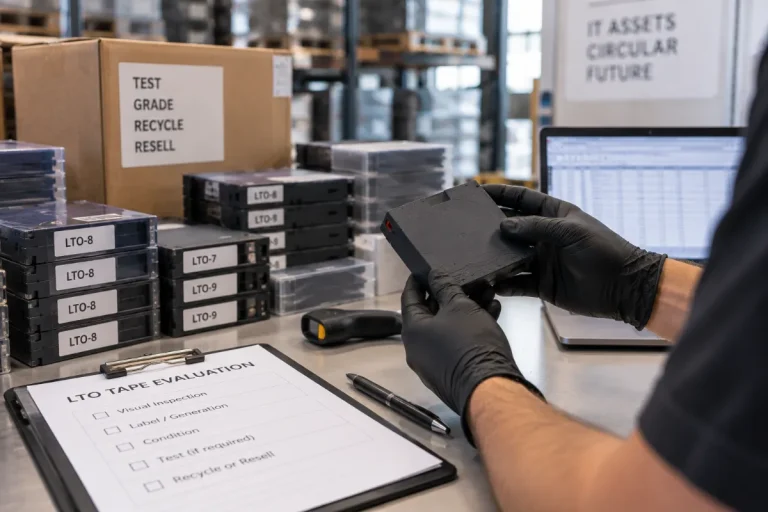
Tape Cartridge Sorting Station
LTO
Dakodah

What to Do With Used LTO Tapes: Sell, Recycle, or Securely Dispose of Them

Got boxes of old LTO tapes sitting in a data center, a storage room, an off-site archive somewhere? They might be worth more than you’d guess. Before anything gets tossed in a recycling bin, it’s worth stopping to ask two questions: can these be resold, and what needs to happen to the data first? Most businesses end up with surplus tape for pretty ordinary reasons. You upgrade to a newer LTO generation. You swap out backup infrastructure. You close a
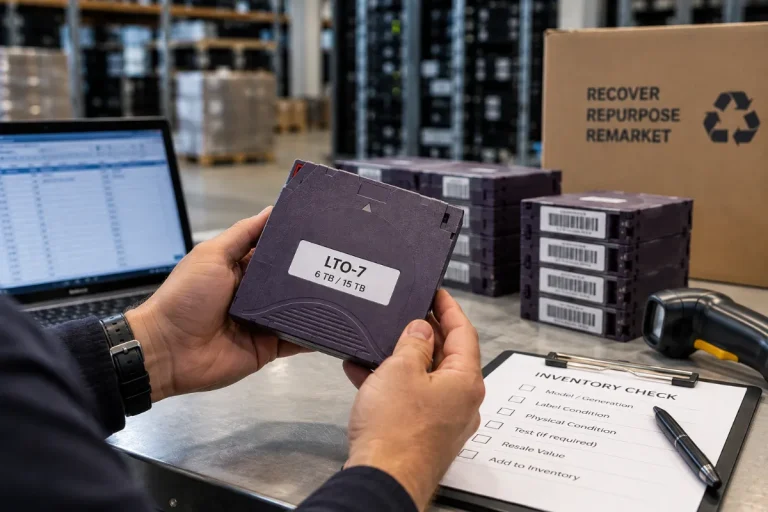
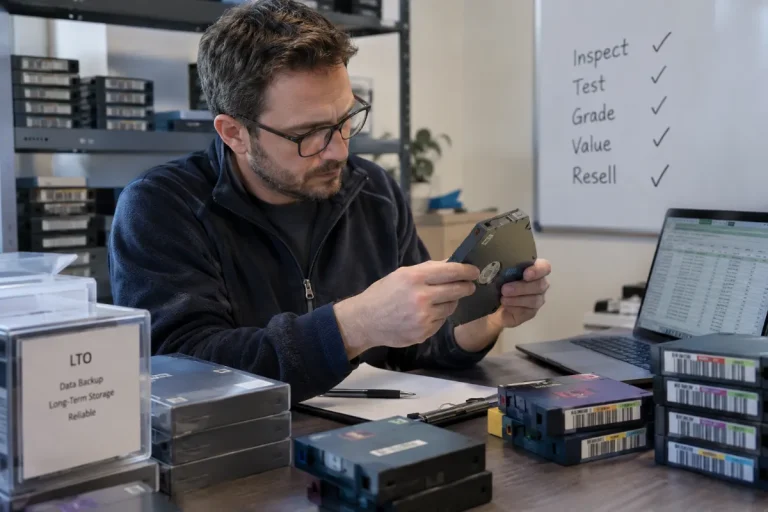
LTO-7 Tape Inventory Processing
LTO
Dakodah

LTO-7 Tape Guide: Capacity, Compatibility, Resale Value, and What to Do With Used LTO-7 Tapes

LTO-7 tape remains widely recognized in enterprise backup and archive environments. Even as organizations move to newer LTO generations, many businesses still operate LTO-7-compatible infrastructure or maintain older tape libraries for long-term data retention. If your company has surplus LTO-7 tapes, don’t automatically assume they belong in a recycling bin. Depending on quantity, condition, brand, media type, and current market demand, used LTO-7 cartridges can still carry real resale value. At We Buy Used IT Equipment, you can submit your

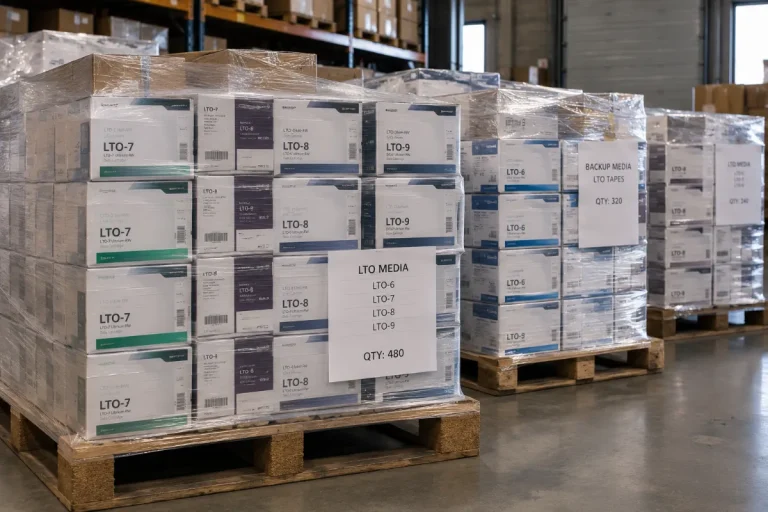
LTO Tape Storage in Modern Data Center
LTO
Dakodah

LTO-8 vs. LTO-9 vs. LTO-10: What’s the Difference?

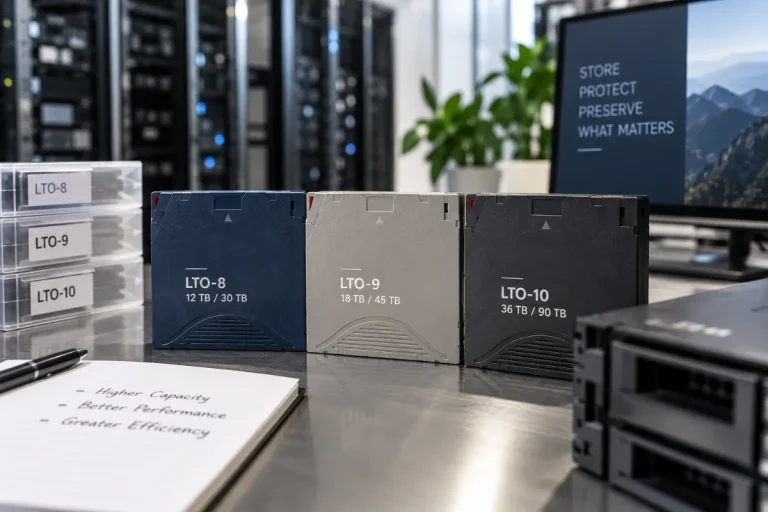
LTO-8, LTO-9, and LTO-10 are three of the most important generations of Linear Tape-Open technology used for enterprise backup and archival storage. The differences between them come down to storage capacity, performance, media compatibility, and infrastructure requirements. And if you’re upgrading your tape environment, those differences raise another question worth asking early: what should you do with the tapes, drives, and libraries you’re replacing? Quick Comparison: LTO-8 vs. LTO-9 vs. LTO-10 Generation Native Capacity Compressed Capacity* Compatibility LTO-8 12 TB

LTO Tape Inventory Processing Workspace
LTO
Dakodah

LTO Tape Recycling and Disposal Guide

When LTO backup tapes reach the end of their useful life, your organization has to decide what happens next. Should you sell them, reuse them, recycle them, sanitize them, or destroy them physically? The right answer depends on two things: the condition and potential resale value of the media, and how sensitive the information stored on it is. What Is LTO Tape Recycling? LTO tape recycling means processing retired magnetic tape cartridges and their components through an appropriate recycling or

Tape Cartridge Inspection Workspace
LTO
Dakodah

Are Old LTO Tapes Worth Money?

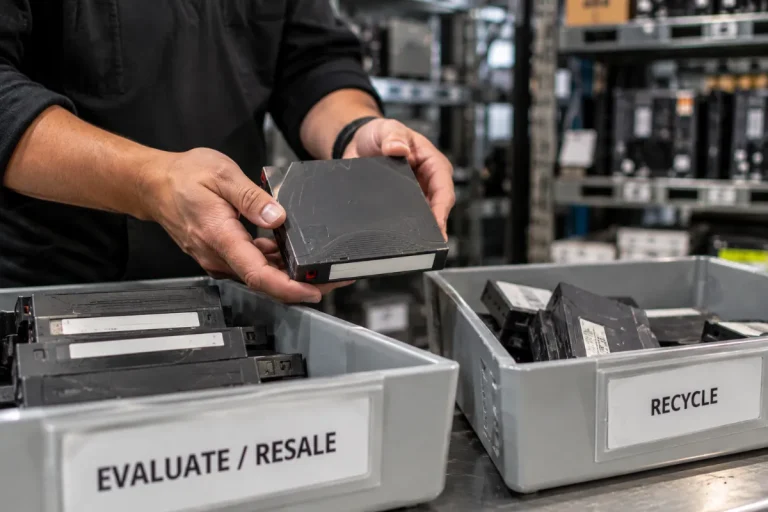
Yes, some old LTO tapes can be worth real money. If your organization is upgrading a tape library, consolidating a data center, moving backups to the cloud, or simply clearing out old storage inventory, don’t assume your LTO cartridges are worthless. Depending on generation, quantity, brand, condition, cartridge type, and current demand, used LTO tapes can carry genuine secondary-market value. What Makes an LTO Tape Valuable? There’s no single fixed price for a used LTO cartridge. Instead, several factors work

Technician holding a used LTO tape cartridge for resale evaluation
LTO
Dakodah

Who Buys Used LTO Tapes? A Guide to Selling Surplus Backup Media

Do you have boxes, pallets, or a full inventory of retired LTO tapes sitting in storage? You might assume no one wants them anymore. That’s not the case. Used LTO tapes still hold resale value, and the amount depends on generation, quantity, condition, type, and current market demand. Every year, companies upgrade their tape libraries, move to newer LTO generations, consolidate data centers, shift workloads to the cloud, and change backup strategies. These changes often leave organizations holding hundreds, or

how to vet a recycler for LTO tapes
Data Center Services
Alex

How to Vet a Certified Downstream Recycler for Your LTO Tapes

Enterprise data tape may not get the same attention as hard drives or cloud infrastructure, but LTO tape remains one of the most widely used and sensitive data storage formats in the world. Financial institutions, healthcare providers, government agencies, and large enterprises rely on LTO tapes for long-term retention, disaster recovery, and regulatory compliance. When those tapes reach end-of-life, choosing the right Recycler for Your LTO Tapes is not just an operational decision—it is a data security, compliance, and risk-management

The Pros and Cons of Using M8 for LTO7 Tapes

As organizations continue to handle growing volumes of data, tape storage remains a reliable, secure, and cost-effective option for long-term archiving. LTO (Linear Tape-Open) technology in particular has played a major role in enterprise storage environments. However, with each new generation of LTO, users must make decisions that balance cost, capacity, and compatibility. One decision that often comes up is whether to use M8 formatting on LTO7 tapes. The concept is simple: when an LTO7 tape is written in an

old tape reels
Data Tape Media
Alex

The History of Data Tapes: From Round Reels to LTO and IBM 3592

Data storage has come a long way — but few technologies have shown the longevity, resilience, and cost-efficiency of magnetic tape. From the massive round reels of the 1940s to today’s compact, multi-terabyte LTO and IBM 3592 cartridges, tape has evolved into a technology that remains not only relevant but essential in the age of big data, AI, and compliance regulation. So why does a storage medium that predates the moon landing still dominate the world’s largest data centers? Let’s

Which Organizations Still Use Data Tape
Data Tape Media
Alex

Who Still Uses Tape Storage in 2026, and Why

Tape has been called “dead” for decades. Yet some of the largest data operations in the world still write petabytes to tape every year. If anything, tape matters more now than it did ten years ago. This guide explains who still uses tape storage, why they rely on it, and what it means for your own backup and archive plans. As a company that buys and processes used LTO and IBM 3592 tapes every day, we see firsthand how much

LTO & 3592 Tape Growth in 2025: The Data Storage Revival No One Saw Coming
Data Storage
Alex

LTO & 3592 Tape Growth in 2025: The Data Storage Revival No One Saw Coming

The Tape Renaissance You Didn’t See Coming For years, IT thought leaders buried tape in the “legacy” graveyard, assuming cloud and flash would fully replace it. Yet here we are in 2025: tape storage is not just alive—it’s thriving. In 2024, enterprise-class Linear Tape-Open (LTO) shipments hit 176.5 exabytes (EB)—a 15.4% year-over-year increase (LTO.org). And it’s not just LTO making waves. IBM’s 3592 TS1170 boasts 50 TB native capacity with 400 MB/s throughput, outperforming LTO-9 by more than 2.5× in

Close-up of several individuals handing off tape cartridges in a clean archive room, symbolizing equity and teamwork.
Data Tape Media
Alex

Tape Backup in 2025: LTO & 3592 Libraries, Compliance & Buyback Strategies

Data center managers face a never-ending balancing act: keeping data secure, meeting compliance mandates, controlling costs, and avoiding downtime — all while managing the avalanche of data growth. While cloud-first evangelists keep telling you “tape is dead,” the reality inside modern enterprise data centers says otherwise. Tape backup — particularly LTO and 3592 tape libraries — is not only alive but increasingly critical for compliance, risk mitigation, and operational resilience. Yet, too many organizations are failing to follow LTO tape

Search