Got boxes of old LTO tapes sitting in a data center, a storage room, an off-site archive somewhere? They might be worth more than you’d guess. Before anything gets tossed in a recycling bin, it’s worth stopping to ask two questions: can these be resold, and what needs to happen to the data first?
Most businesses end up with surplus tape for pretty ordinary reasons. You upgrade to a newer LTO generation. You swap out backup infrastructure. You close a data center, or shift workloads to the cloud, or just update how long you’re required to keep things. Any one of those can leave you staring at a few hundred, or a few thousand, cartridges you suddenly have no use for.
Whether those tapes are worth anything depends on generation, quantity, condition, and what the market’s actually doing right now. At We Buy Used IT Equipment, we look at surplus LTO tapes the same way we look at any other retired storage media: figure out where the value is, then make sure the data gets handled properly no matter what.
What Is an LTO Tape, Exactly?
LTO stands for Linear Tape-Open. It’s magnetic tape storage, the kind of thing data centers, healthcare systems, and financial institutions have leaned on for backup and archival storage for years. Unlike a hard drive, the data lives on a removable cartridge, one you load into a compatible tape drive or an automated library.
There have been several generations over the years:
Each one holds more, moves faster, and works a little differently than the last. Which is exactly why organizations end up with drawers full of older cartridges every time they upgrade. If you want the full capacity-by-generation breakdown, we’ve got that on our LTO tape buyback hub.
So, Are Used LTO Tapes Actually Worth Money?
Often, yes. A handful of things determine what a given lot is worth: the generation, the brand, whether it’s rewritable or WORM media, condition, how it was packaged and labeled, and honestly, just what buyers want right now.
Newer generations tend to sell better. But that doesn’t mean LTO-5 or LTO-6 is dead weight, plenty of organizations still run older tape infrastructure, which keeps demand alive for media you might assume nobody wants anymore. If you’ve got a big pile sitting around, it’s worth getting a real evaluation before anything heads to recycling. We’ve turned what people assumed was scrap into a legitimate payout more times than you’d think.
Who Actually Buys This Stuff?
Companies like ours, ones that specialize in used IT equipment and storage media, purchase surplus LTO tapes from data centers, IT departments, resellers, and businesses retiring old infrastructure.
When you reach out, have a few things ready: the generation, manufacturer, quantity, condition, whether it’s new or used, whether you’ve still got original packaging, and whether any data’s still on there. The more of that you can tell us upfront, the faster we can tell you what it’s worth.
Which Generations Can Actually Be Resold?
Depends on the year and the market, honestly. LTO-5 through LTO-9 all show up regularly in enterprise environments, and LTO-10 is the newest kid on the block.
Older cartridges usually see less demand, but “less” isn’t “none.” Plenty of businesses keep legacy tape systems running for regulatory archives or backups that haven’t migrated anywhere newer. If you want a side-by-side look at specific generations, check our page on LTO-6 or our LTO-8 vs. LTO-9 vs. LTO-10 comparison.
Why Does This Stuff Pile Up in the First Place?
A few common culprits:
Upgrading your tape library. New drives mean old cartridges don’t always fit the new setup.
Shutting down or merging data centers. Someone always finds a closet full of tape nobody remembers labeling.
Moving to the cloud. Less reliance on physical media, more surplus sitting around.
Retention periods finally expiring. Once the clock runs out, that archived data is fair game for reuse, resale, or destruction.
Bigger ITAD projects. Sometimes tape is just one piece of a much larger cleanout involving servers, storage arrays, and tape drives and libraries all at once.
Sell It, Recycle It, or Destroy It?
This really comes down to three things: does it have resale value, how sensitive is whatever’s on it, and what do your compliance requirements actually say?
If the answer checks out on security and there’s a buyer, selling gets you real money back for something you were about to throw away. If there’s no market, recycling still beats a landfill. And if policy, contracts, or regulation demand it, destruction is just the answer, no way around it.
Figure out your security requirements first. Everything else follows from that.
What About the Data Sitting on These Tapes?
This is the part people skip, and shouldn’t. A single cartridge can hold customer records, employee data, financial information, medical records, intellectual property, whole database backups, you name it.
Pulling a tape out of a library doesn’t erase any of that. It’s just sitting there until somebody actively wipes or destroys it. If your organization doesn’t have a documented process for handling retired media, that’s a gap worth closing before you move another box out the door.
What Does “Sanitization” Actually Mean Here?
Sanitization just means making the data inaccessible, regardless of how much effort someone puts into recovering it. If you’re building out a policy around this, NIST Special Publication 800-88 Revision 2 is the standard to work from right now.
Which method you use depends on the media type, how sensitive the data is, and what you plan to do with the tape afterward. One thing worth repeating: whatever works for wiping a hard drive or SSD doesn’t automatically translate to magnetic tape. They’re different animals.
Does NIST 800-88 Even Cover Tape?
Yep. Tape is magnetic media, so it falls under the same umbrella as any other storage you’re sanitizing. NIST SP 800-88 Rev. 2 lays out how to build that program and pick a method based on sensitivity and intended outcome.
If compliance matters to your organization (and it probably does), document the process, and actually check that it meets whatever you’re required to follow.
Can You Degauss an LTO Tape?
You can, a strong enough magnetic field will make the data unreadable. But don’t mix this up with prepping a tape for resale.
Once you degauss a cartridge, it’s usually done as functional media. So before picking a method, decide what you actually want out the other end: reuse, resale, recycling, or straight-up destruction. If keeping the cartridge usable matters to you, degaussing probably isn’t your answer.
Can These Just Get Recycled?
Sure, if there’s no resale or reuse case left for them. Just don’t treat data-bearing tape like it’s the same as office paper waste.
Before anything goes to a recycler, check:
- Is there sensitive information on it?
- Does it need sanitization or destruction first?
- Could it actually be resold instead?
- How will you document what happened to it?
This matters more the bigger your inventory gets.
Why Is Anyone Still Using Tape in 2026?
Fair question, given how much cloud storage has taken over. But tape’s still got one trick nothing else really matches: you can physically disconnect it from the network entirely.
That air gap is genuinely useful. A tape sitting on a shelf can’t be touched by ransomware the way a networked drive can. It’s also just a solid, cheap option for long-term archival storage at scale, which is exactly why plenty of enterprise backup strategies still keep tape in the mix.
What’s the Right Process for a Data Center Retiring Old Tapes?
Don’t just wing it. A real process looks something like this:
- Inventory everything, generation, manufacturer, quantity, type.
- Figure out how sensitive the data probably is.
- Check whether retention requirements have actually expired.
- See if there’s resale value before writing it off.
- Pick a sanitization method that fits your requirements.
- Document the whole thing.
Skip step four and you might be destroying something that could’ve paid for the whole project.
Can You Sell a Big Bulk Lot?
Absolutely, and honestly, that’s often when we’re most interested. Bulk inventories show up after data center closures, library upgrades, acquisitions, cloud migrations, and general ITAD cleanups.
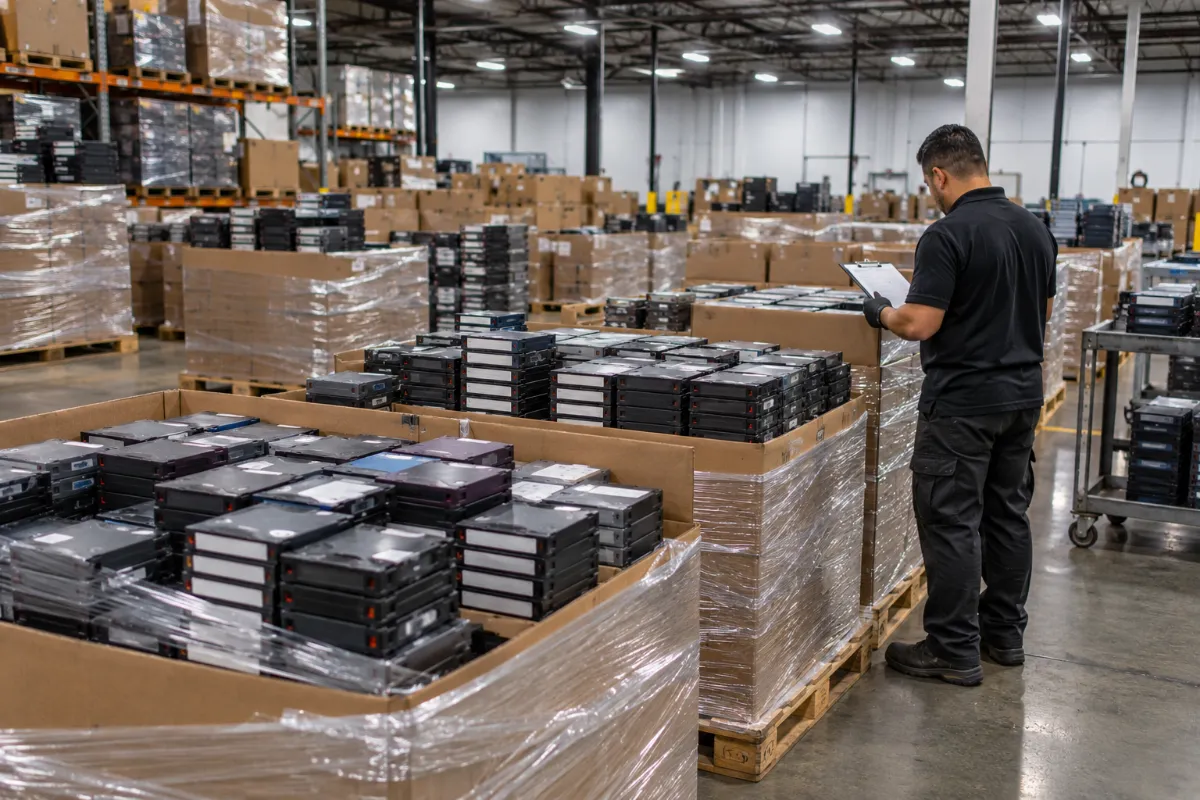
If you’ve got a large stash, sort it by generation and quantity before you reach out. Photos of the cartridges, boxes, and pallets speed things up a lot on our end.
What Do You Need From Me to Get a Quote?
Send over whatever you’ve got:
- Generation (LTO-5 through LTO-10)
- Brand (IBM, HPE, Fujifilm, Sony, Quantum, whoever made it)
- Rough quantity
- Condition, new, used, sealed, loose
- Rewritable or WORM
- Where it’s currently located
- Any other equipment in the mix, drives, libraries, servers, whatever else is getting retired alongside it
Photos help more than people expect.
Frequently Asked Questions
Where can I actually sell used LTO tapes?
Companies that buy surplus enterprise IT equipment and storage media, like us. Know your generation, quantity, condition, and data-security needs before you reach out.
Who buys this stuff in bulk?
Used IT equipment buyers, especially ones who specialize in enterprise storage. Large inventories from data center closures or tech refreshes are exactly what we look for.
Are old tapes actually worth anything?
Some are, yeah. It’s generation, quantity, condition, type, and demand. Even tapes your business is done with might still be useful to someone running older compatible infrastructure.
Can I reuse an LTO tape instead of selling it?
Some cartridges are rewritable, but whether you should reuse one depends on its condition, history, and whatever your data-security policy requires.
Should I destroy tapes before trying to sell them?
No, don’t jump straight to destruction. That kills any resale value for good. Figure out your security and retention requirements first.
Can these be recycled?
Yes, if resale or reuse isn’t an option. Just handle the data-security side before anything leaves your building.
What’s actually different between sanitization and destruction?
Sanitization stops people from accessing the data. Destruction physically wrecks the media itself. Which one applies depends on sensitivity and what you’re planning to do with it next.
Is tape actually secure for backups?
It can be, especially because you can take it offline entirely. Real security still comes down to access controls, encryption, and how carefully you handle storage and disposal.
Ready to Sell Your Used LTO Tapes?
If you’ve got tapes, drives, libraries, servers, or other surplus IT gear sitting around, don’t assume it’s worthless. Get a quote, tell us the generation, quantity, condition, and location, send a few photos, and we’ll take it from there.
Whether you’re clearing out one storage room or working through an entire data center lot, the first step is just finding out what you’ve actually got.