Colocation, Cloud & Hyperscale IT Asset Disposition at Scale
Data center hardware does not age gracefully on the books. Compute cycles get faster. Storage density improves. Networking throughput requirements climb. And the servers that were the right answer three years ago are the bottleneck today.
For colocation operators, cloud infrastructure teams, and organizations managing hyperscale-adjacent environments, equipment rotation is not a one-time event — it is a recurring operational reality. Racks get pulled. Lots get staged. And someone has to figure out what happens next.
We Buy Used IT Equipment is built for exactly this. We purchase data center hardware in bulk — servers, storage arrays, networking equipment, and full rack lots — from colocation facilities, enterprise data centers, cloud migration projects, and organizations rightsizing their on-premises infrastructure. We handle the data destruction, document everything, and pay you for equipment that still has secondary market value.
Fast quotes. Clean logistics. Documentation that satisfies compliance teams. No residual value left on the table.
Data Center Equipment We Buy
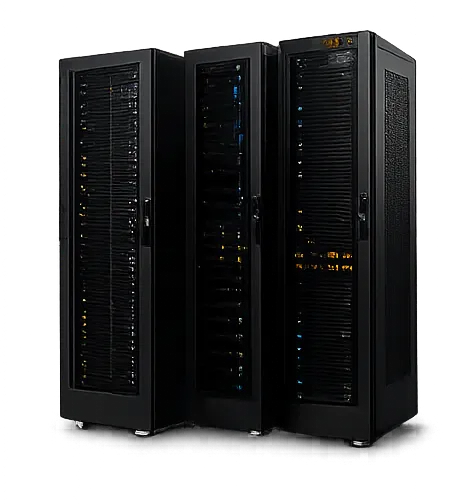
We purchase a broad range of enterprise and hyperscale-adjacent data center hardware — individual units, full rack lots, and complete decommission projects. If it came out of a data center, we want to evaluate it.
Equipment Category | Platforms & Examples |
Rack-Mount Servers | Dell PowerEdge, HP ProLiant, Cisco UCS, Lenovo ThinkSystem, Supermicro — 1U, 2U, 4U configurations across generations |
Blade Servers & Chassis | HP BladeSystem c-Class, Dell PowerEdge M-Series, Cisco UCS B-Series blade chassis and individual blades |
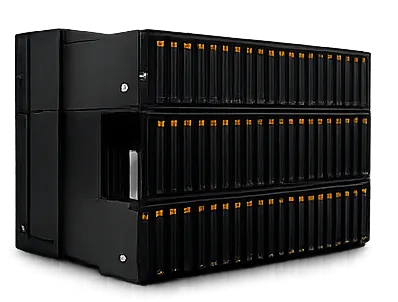
Storage Arrays & SAN | NetApp FAS and AFF, EMC/Dell VNX, Unity, Pure Storage, HPE 3PAR, Nimble, IBM Storwize — SAN, NAS, and all-flash arrays |
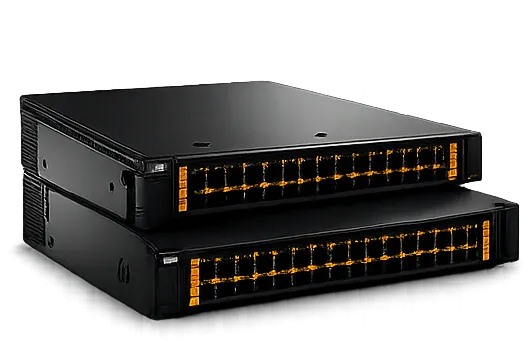
Networking Equipment | Cisco Nexus, Catalyst, Juniper EX/QFX, Arista, Brocade — top-of-rack switches, core switches, spine-leaf infrastructure, load balancers |
Security Appliances | Palo Alto, Cisco Firepower, Fortinet, Check Point, F5 — firewalls, IPS, WAF, and ADC appliances from data center perimeter environments |
GPU & High-Performance Compute | NVIDIA DGX, Tesla, A100, H100 cards — HPC nodes, AI/ML training infrastructure, GPU clusters from cloud migration projects |
Data Center Infrastructure | UPS systems, PDUs, KVM switches, server rails, cable infrastructure, raised floor tiles — facility equipment from decommissioned data halls |
Whole Rack & Bulk Lots | Full rack contents, multi-rack lots, and complete row decommissions — we evaluate, quote, and process bulk lots as a single engagement |
Not sure if your lot qualifies? Submit a rough inventory — make, model, generation, quantity — and we will evaluate it at no cost.
Data Center Environments We Work With
Data center IT asset disposition looks different depending on the operating model and the reason for the refresh. We have built our process around the scenarios data center teams actually encounter.
Colocation Data Centers
Colo operators manage equipment for dozens to hundreds of tenants. When tenants vacate, downsize, or upgrade, outgoing hardware gets staged in colo space — sometimes for months. We work with colo operators to clear this equipment efficiently: fast assessment, coordinated pickup, certified data destruction for every data-bearing device, and payment for qualifying hardware. We understand that colo space is revenue-generating floor space and cleared equipment is a priority.
Enterprise Data Centers & Private Cloud
Organizations with on-premises or private cloud infrastructure running regular refresh cycles — three to five years on compute, longer on storage — generate significant volumes of outgoing hardware. We evaluate and buy mixed lots from enterprise data centers, maintaining asset-level chain of custody from intake through final disposition and producing documentation for IT asset management systems and compliance records.
Cloud Migration Projects
Migrations to public cloud or hybrid infrastructure create large, time-sensitive decommission events. On-premises servers, storage arrays, and networking equipment need to move out on migration project timelines — which are often tighter than standard ITAD processes accommodate. We provide rapid assessment and pickup coordination timed to migration milestones.
Hyperscale-Adjacent & Tier II Data Centers
Second-tier data centers and organizations running hyperscale-adjacent workloads rotate hardware on aggressive cycles driven by performance and density requirements. The equipment coming out — particularly GPU infrastructure, high-density storage, and high-throughput networking — often carries significant residual value that needs accurate market pricing, not a generic buyback formula.
Data Center Consolidations & M&A Activity
Corporate mergers, acquisitions, and data center consolidation projects frequently generate large, mixed lots of equipment on compressed timelines. We handle complex, multi-location consolidation decommissions with the logistics coordination, documentation quality, and volume capacity that these engagements require.
Managed Service Providers with Data Center Infrastructure
MSPs operating their own data center infrastructure — co-managed hosting, private cloud for clients, colocation-based managed services — rotate hardware on refresh cycles that generate recurring ITAD needs. We work with MSPs as a repeatable partner for ongoing equipment retirement, not just one-time engagements.
How the Data Center Buyback Process Works
Data center decommissions operate on project timelines. Our process is built to fit those timelines — not force them to fit ours.
Step 1: Inventory Assessment & Quote
Submit your equipment list — CMDB export, rack manifest, or a working spreadsheet with make, model, generation, and quantity. We review and respond with a bulk buyback quote within one business day. For large or complex lots — multi-rack, multi-location, mixed generations — we schedule an assessment call to discuss specifics and calibrate pricing accurately.
Step 2: Decommission Timeline Alignment
We coordinate our pickup and logistics schedule with your decommission project milestones — not the other way around. For colo clearances, we time pickup to your lease termination. For migration projects, we align to your cutover dates. For consolidation projects, we can phase across multiple site clearances.
Step 3: On-Site Logistics & Equipment Staging
For large-volume decommissions, we provide on-site support — equipment de-racking, staging, palletizing, and freight coordination. We bring the right packaging and transport resources for server hardware. Colo operators and data center facility managers do not need to manage the physical logistics of clearing the floor.
Step 4: Chain of Custody & Secure Intake
Every device is logged at intake: make, model, serial number, asset tag where applicable, and condition. The chain of custody record opens at this moment. For enterprise clients with specific compliance requirements — NIST 800-88, HIPAA, SOX — these are flagged at intake and the appropriate handling protocol is applied from that point forward.
Step 5: Data Destruction — Before Any Other Processing
Data destruction is applied before condition evaluation, pricing confirmation, or any downstream processing. We follow NIST 800-88 media sanitization standards — software overwriting for functional drives, physical destruction for drives that cannot be reliably sanitized. Every data-bearing device receives a certificate of data destruction. For data center environments with sensitive or regulated data, we apply the sanitization level appropriate to the data classification.
Step 6: Asset Processing & Value Recovery
Devices that pass sanitization and functional assessment enter our remarketing inventory — priced to current secondary market conditions, not a blanket depreciation formula. High-value hardware — recent-generation servers, GPU infrastructure, high-density storage — gets the pricing attention it deserves. Non-resalable equipment goes to R2v3-aligned certified recycling partners, documented and traceable.
Step 7: Payment & Disposition Package
Project close delivers payment for purchased equipment and a complete disposition package: certificates of data destruction per device, asset-level disposition report, chain of custody records from intake through final disposition, and downstream recycling documentation. Your team has what it needs for IT asset management de-accountability and compliance records.
What Data Center Hardware Is Actually Worth on the Secondary Market
Data center equipment residual value is widely misunderstood — often in both directions. Some organizations write off hardware as worthless and never bother to assess it. Others expect secondary market prices that no longer reflect current demand. Both outcomes leave money on the table.
Here is the honest market picture:
High Secondary Value — Act Before It Depreciates
Recent-generation servers (two to four years old) from Dell, HP, Cisco, and Lenovo hold strong secondary market value. GPU compute — particularly NVIDIA A100, H100, and V100 cards — has exceptionally strong demand in the current AI/ML infrastructure market. High-density all-flash storage from Pure Storage, NetApp AFF, and HPE Nimble commands solid secondary pricing. Cisco Nexus and Arista networking equipment from recent switch generations retains meaningful value.
Moderate Value — Worth Assessing, Not Assuming
Four-to-six year old enterprise servers still move in the secondary market, particularly for specific configurations with active resale demand. Older storage arrays have parts and component value even when full-system demand is limited. Legacy networking equipment often has a defined secondary market depending on platform and generation.
Below Buyback Threshold — Dispose Properly, At No Extra Cost
Hardware beyond its secondary market life still needs certified disposition. When a lot includes equipment below our buyback threshold, we process it through our R2v3-aligned certified recycling chain at no additional charge where the overall lot economics support it. You still get the documentation — and the floor space cleared.
The point is this: do not assume your outgoing data center hardware has no value before you have someone with current market knowledge evaluate it. Submit the list. We will tell you honestly what is worth buying and what is not.
Data Security in Data Center Decommissions: The Documentation That Matters
Data center decommissions generate more data security exposure than almost any other IT event. Servers that have processed transaction records, customer data, patient information, or financial data do not become safe just because they are pulled from a rack and staged on a pallet. The data is still there — and it stays there until it is verifiably destroyed.
Here is what our process produces for every data center engagement:
- NIST 800-88 compliant data sanitization — applied at the appropriate level (Clear, Purge, or Destroy) based on data sensitivity; the federal standard for media sanitization and the framework that regulated-industry clients expect
- Certificate of data destruction per device — issued before any device is evaluated for resale or moved through any other processing step; formatted for compliance audit submission
- Chain of custody documentation — uninterrupted, timestamped, asset-level records from intake through final disposition; the evidentiary record for breach prevention and regulatory accountability
- NAID-aligned data destruction practices — meeting information destruction industry standards for enterprise data environments
- R2v3-aligned certified recycling — for non-resalable equipment; documented downstream processing through verified partners only; no unregulated routing
- Compliance-specific handling — for data center environments subject to HIPAA, SOX, PCI-DSS, NIST 800-171, or other sector-specific requirements; we align the documentation output to the applicable framework
Sustainability & Circular Economy: What Happens to Data Center Hardware After Decommission
Data centers are a significant focus area in enterprise sustainability programs. The energy consumption of active infrastructure gets most of the attention — but the end-of-life disposition of hardware is an increasingly visible part of the story, particularly for organizations reporting Scope 3 emissions or responding to ESG investor inquiries.
Our reuse-first approach to data center ITAD directly supports circular economy objectives. Functional hardware that goes back into the secondary market extends the productive life of manufactured equipment, reduces e-waste, and decreases demand for newly produced devices. Enterprise servers, storage arrays, and networking equipment that rotate out of hyperscale-adjacent environments often serve productive second lives in Tier II data centers, enterprise environments, research institutions, and international markets.
Our disposition reporting includes the metrics that sustainability teams need: how much hardware was reused, how much was recycled through certified channels, and what downstream processing documentation supports your Scope 3 reporting and green procurement disclosures.
Frequently Asked Questions
How do I sell data center equipment in bulk?
Start by submitting your equipment inventory — a rack manifest, CMDB export, or a working spreadsheet with make, model, generation, and quantity. We review it and provide a bulk buyback quote within one business day. For large or complex decommissions, we schedule an assessment call to discuss specifics. From there, we align to your project timeline, coordinate pickup or on-site logistics, handle data destruction on every data-bearing device, and deliver payment and documentation at project close.
What is the secondary market value of enterprise servers?
Server secondary market value depends primarily on generation, configuration, and condition. Recent-generation servers — two to four years old — from Dell PowerEdge, HP ProLiant, Cisco UCS, and Lenovo ThinkSystem hold strong secondary market value. Older generations typically see meaningful depreciation, though high-demand configurations retain value longer. GPU compute infrastructure — particularly NVIDIA A100, H100, and V100 — has exceptionally strong secondary market demand driven by AI/ML infrastructure growth. The most accurate answer for your specific lot is a direct assessment, which we provide at no cost.
Can you handle an entire data center decommission, including physical removal?
Yes. For large-volume decommissions, we provide on-site support: de-racking, staging, palletizing, and freight coordination. We bring the equipment and manpower to physically clear the floor — you do not need to manage the logistics separately. For smaller lots, we coordinate standard freight pickup. We discuss the right logistics approach when we assess the project.
How do you handle data destruction on enterprise servers and storage?
Data destruction is applied to every data-bearing device before any other processing step — before condition evaluation, before pricing confirmation, before anything else. We follow NIST 800-88 media sanitization guidelines, applying the Clear, Purge, or Destroy level based on the data sensitivity classification of the environment. Every data-bearing device receives a certificate of data destruction, referenced by serial number. For environments with specific compliance requirements — HIPAA, SOX, PCI-DSS, NIST 800-171 — we align the documentation output to those frameworks.
What happens to data center equipment that is too old to have secondary market value?
Equipment below our buyback threshold is processed through R2v3-aligned certified recycling partners. We maintain full downstream documentation — recycling facility, certification, processing method — and include it in the project disposition package. Where the overall lot economics support it, disposal processing is included at no additional charge to the client. The disposition documentation is the same regardless of the hardware’s value.
How long does a large data center decommission take?
Timeline varies based on lot size, location, and decommission complexity. Single-rack to ten-rack decommissions in the Southern California area can often be assessed, picked up, and processed within two to three weeks from initial contact. Larger decommissions — multi-location, multi-hundred-rack projects — are planned around project milestones and can run over several weeks or months. We establish a realistic timeline at the outset and plan logistics to meet it.
Can you accommodate colo facility access requirements and security protocols?
Yes. Colocation facilities have specific vendor access requirements — credentialing, escorted access, facility security protocols, and in some cases advance approval for equipment removal. We accommodate these requirements as a standard part of logistics planning. We do not show up at a colo expecting ad hoc access; we coordinate with facility management in advance and work within their required protocols.
Do you buy GPU compute infrastructure from AI/ML workloads?
Yes — and this is a category where accurate market pricing makes a significant difference. NVIDIA GPU infrastructure — DGX systems, A100, H100, and V100 cards, HGX platforms — has strong secondary market demand in the current AI/ML infrastructure market. We evaluate and price GPU compute at current market rates, which can be substantially higher than what a general ITAD buyer would offer for the same hardware. If your decommission includes GPU infrastructure, include it in the inventory you submit.
Ready to Move Your Data Center Equipment Forward?
Whether you are clearing a colo cage on a lease deadline, managing a cloud migration decommission, or rotating hardware on a regular refresh cycle — we are the ITAD partner that handles the full scope: logistics, data destruction, documentation, and value recovery.
Submit your equipment list for a free bulk assessment. We will evaluate what you have, tell you what it is worth at current market rates, and walk you through exactly how the decommission process works.