SOX, PCI-DSS & Audit-Ready ITAD for Banks, Insurers & Financial Institutions
Financial services organizations operate under some of the most demanding data security and compliance requirements of any industry. SOX demands documented controls over financial data infrastructure. PCI-DSS requires that cardholder data be rendered unrecoverable on every device that touches it. Internal audit and risk management teams want a paper trail that holds up under scrutiny — not just a vendor receipt.
When you retire IT equipment in a financial environment, none of that compliance obligation pauses. A decommissioned trading floor workstation, a retired data center server, or a replaced branch network device carries the same regulatory weight at disposition as it did in active use. The data must be verifiably destroyed. The process must be documented. And the documentation must survive an audit.
We Buy Used IT Equipment provides financial services organizations with a structured, compliant IT asset disposition process — NIST 800-88 data destruction, SOX-audit-ready chain of custody documentation, PCI-DSS compliant handling, and certified downstream recycling for devices that cannot be resold. Where equipment has residual value, we pay for it.
REGULATORY CONTEXT: SOX, PCI-DSS & GLBA
SOX Section 802 and related IT General Controls (ITGCs) require documented controls over systems that process financial data — including controls over decommissioning and data disposal. PCI-DSS Requirement 9 mandates that cardholder data be rendered unrecoverable on media leaving a PCI scope. The Gramm-Leach-Bliley Act (GLBA) Safeguards Rule requires financial institutions to implement safeguards for customer financial information through its full lifecycle — including disposal. Together, these frameworks require that financial IT disposition be documented, verifiable, and defensible.
Financial Sector IT Equipment We Buy
We purchase a wide range of financial services IT equipment — from retail branch hardware to trading infrastructure to data center assets. If your organization is retiring it under a compliance obligation, we evaluate it.
Equipment Type | Financial Sector Applications |
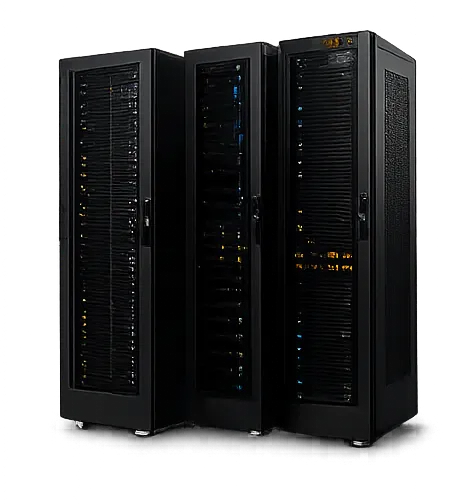
Servers & Compute | Core banking servers, transaction processing infrastructure, data center compute — Dell, HP, Cisco, Lenovo enterprise platforms |
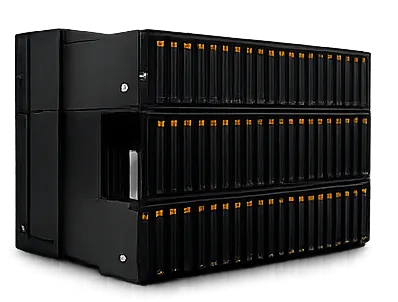
Storage Systems | Financial records storage, SAN/NAS arrays, archival media — EMC, NetApp, Pure Storage, HPE |
Trading & Market Data Infrastructure | Workstations and servers from trading floors, market data feeds, algorithmic trading platforms |
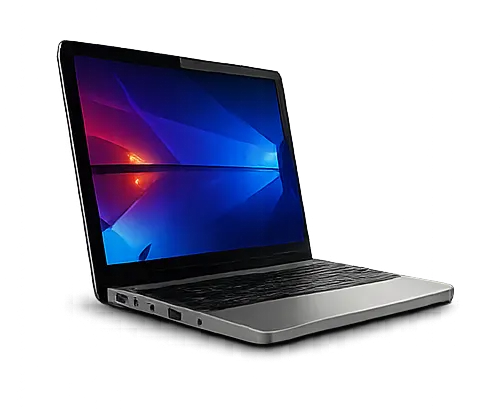
Branch & Office IT | Teller workstations, branch laptops, ATM-adjacent back-office systems, retail banking endpoints |
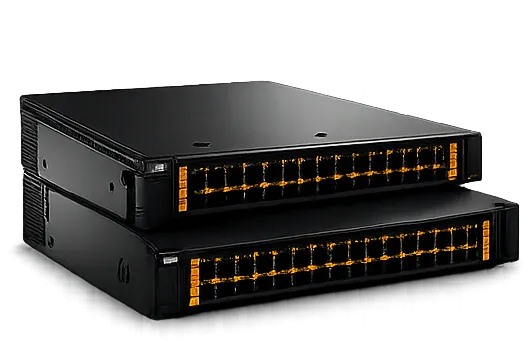
Networking & Security Appliances | Firewalls, load balancers, network switches — Cisco, Juniper, Palo Alto, F5 — from PCI-scoped environments |
Backup & Disaster Recovery | Backup appliances, tape libraries, off-site DR servers and storage retiring from financial data environments |
End-of-Lease Returns | Full device fleet and infrastructure lots returning from leases — banks, insurance carriers, asset managers, fintechs |
Financial Organizations We Work With
Financial services is a broad sector with meaningfully different compliance profiles depending on organization type. We understand those differences.
Banks & Credit Unions
From community banks to regional institutions to national banks, every device that has processed account data, customer records, or transaction history carries disposal compliance obligations under GLBA and SOX. We handle retail branch hardware, back-office infrastructure, and data center assets with full chain of custody documentation from pickup through final disposition.
Capital Markets & Trading Firms
Trading floor workstations, market data infrastructure, and high-performance compute systems retire on tight timelines — often driven by technology refresh cycles that cannot wait for a slow ITAD process. We provide rapid assessment, structured buyback pricing, and compliance documentation calibrated for firms operating under SEC, FINRA, and SOX oversight.
Insurance Carriers & Brokerages
Insurance organizations handling policyholder financial data operate under state insurance regulations, GLBA, and often SOX — particularly for publicly traded carriers. We provide compliant disposition for both IT and associated financial data systems, with audit-ready documentation suitable for insurance department review.
Asset Managers & Investment Advisors
RIAs and asset management firms operate under SEC oversight and often handle highly sensitive client financial data across their IT infrastructure. We provide documented, verifiable ITAD for investment management environments with the chain of custody documentation that SEC examination preparedness requires.
Fintechs & Payment Processors
Organizations operating in PCI scope — handling cardholder data, payment processing infrastructure, or point-of-sale systems — have specific PCI-DSS media disposal requirements. We apply PCI-aware handling protocols and issue destruction documentation suitable for PCI audit records.
Financial Services MSPs & IT Teams
Technology teams managing IT infrastructure for financial clients need an ITAD partner who understands both the technical and compliance dimensions. We work with managed service providers, internal IT departments, and outsourced IT teams operating in regulated financial environments.
How the Financial IT Disposition Process Works
Our process is built around the documentation requirements of financial services compliance — not adapted from a general workflow. Every step produces a record, and the chain of custody is maintained without gaps from intake through final disposition.
Step 1: Asset Inventory Review & Quote
Submit your equipment list — spreadsheet, CMDB export, or a working inventory. We review make, model, age, and condition across your lot and provide a buyback quote within one business day. Large or complex lots receive a structured assessment call with our enterprise team.
Step 2: Compliance Logistics Planning
We coordinate pickup or shipping logistics with your IT and facilities teams. For financial environments — particularly those with security requirements for on-site access — we plan entry and handling protocols in advance. For data center or trading floor decommissions, we provide on-site coordination and equipment staging support.
Step 3: Chain of Custody Opens at Intake
Every device is logged at intake: asset tag, serial number, make, model, and condition. The chain of custody record opens at this point and follows every device through every subsequent step — timestamped and asset-level, not summarized at the lot level.
Step 4: Data Destruction Before Processing
Before any device is evaluated for condition, resale value, or routing, data is destroyed. We follow NIST 800-88 media sanitization guidelines — software-based overwriting for functional drives, physical destruction for drives that cannot be reliably sanitized. A certificate of data destruction is issued for every data-bearing device. This certificate is formatted for SOX IT General Controls documentation, PCI-DSS media disposal records, and GLBA Safeguards Rule compliance.
Step 5: Asset Processing & Downstream Routing
Devices that pass sanitization and functional testing enter our remarketing inventory. Devices that cannot be resold go to R2v3-aligned certified recycling partners — verified, documented, and traceable. We do not use unverified downstream processors for financial sector equipment.
Step 6: Audit-Ready Disposition Package
Project close includes a complete disposition package: certificates of data destruction, asset-level disposition report (outcome by device), chain of custody records, and downstream processing documentation. This package is formatted for SOX audit review, PCI-DSS quarterly reporting, internal risk management, and regulatory examination preparation.
The Compliance Framework: SOX, PCI-DSS, GLBA & Data Breach Liability
Financial organizations face overlapping regulatory frameworks that each impose specific requirements on data and device disposition. Here is how our process addresses the most significant:
Sarbanes-Oxley (SOX)
SOX compliance requires documented IT General Controls (ITGCs) over systems that process or store financial reporting data. When those systems are decommissioned, the controls do not end — the decommissioning itself must be documented and defensible. Our chain of custody records and disposition reports are structured to satisfy SOX ITGC documentation requirements, including the asset-level detail and timestamped records that internal and external auditors expect.
PCI-DSS (Payment Card Industry Data Security Standard)
PCI-DSS Requirement 9.4.6 mandates that hard copies and electronic media containing cardholder data be destroyed when no longer needed, such that data cannot be reconstructed. For devices leaving PCI scope at end of life, this means verified sanitization or physical destruction — and documentation that demonstrates compliance to your QSA. We meet this requirement directly: NIST 800-88 compliant sanitization, destruction certificates, and chain of custody records formatted for PCI audit evidence.
GLBA Safeguards Rule
The FTC’s updated Gramm-Leach-Bliley Safeguards Rule requires financial institutions to implement safeguards for customer financial information through its full lifecycle — explicitly including disposal. Our documented disposal process, chain of custody records, and certified downstream recycling align directly with the Safeguards Rule’s requirements for protecting non-public personal financial information through end-of-life handling.
Data Breach Liability
Financial organizations face significant liability exposure if unaddressed data on decommissioned devices surfaces after disposition. State data breach notification laws, SEC breach reporting requirements, and OCC guidance all create downstream liability for organizations that cannot demonstrate that retired devices were properly sanitized. Our certificate of destruction and chain of custody documentation are the evidentiary record that protects against that exposure.
Technical standards applied across every financial sector engagement:
- NIST 800-88 media sanitization — the federal standard covering Clear, Purge, and Destroy levels of data elimination
- Certificate of data destruction — issued per device, formatted for SOX, PCI-DSS, and GLBA compliance records
- Chain of custody documentation — timestamped, asset-level, from intake through final disposition
- NAID-aligned data destruction practices — meeting information destruction industry standards for financial data environments
- R2v3-aligned certified recycling — for non-resalable equipment, documented downstream processing through verified partners
- Audit-ready disposition package — formatted for internal audit, external audit, regulatory examination, and QSA review
The Hidden Risk: Why Decommissioned Financial IT Is a Breach Waiting to Happen
Most data breaches in financial services are associated with active systems — active attacks, insider threats, software vulnerabilities. But a quieter risk category sits in IT storage rooms and surplus queues: retired devices with unaddressed financial data.
The risk scenarios are predictable:
- Servers and workstations pulled from active use and staged in IT storage without a formal disposition timeline — sitting unprotected, outside active security monitoring, for months or years
- Leased hardware returned to lessors with no verified data destruction — financial data potentially accessible to the next lessee
- Branch upgrades where replaced devices are repurposed informally — moved between locations without documented sanitization
- ITAD vendors who collect and process financial hardware without issuing destruction certificates or maintaining chain of custody — leaving the financial institution with no documentation of what happened
We close each of these exposure points. Every device is logged at intake, sanitized before anything else happens, and tracked with documentation your internal audit and risk management teams can use — and your external auditors or regulators can review.
Frequently Asked Questions
What compliance frameworks apply to financial IT equipment disposal?
Financial organizations typically operate under some combination of SOX, PCI-DSS, and GLBA. SOX requires documented IT General Controls over decommissioning of systems touching financial reporting data. PCI-DSS Requirement 9 mandates that cardholder data be rendered unrecoverable on retiring media, with documentation. The GLBA Safeguards Rule requires documented safeguards for customer financial data through disposal. State data breach notification laws and SEC reporting requirements add additional liability dimensions.
What documentation do we receive for SOX compliance?
For SOX-relevant dispositions, we provide: a certificate of data destruction for every data-bearing device (formatted for ITGC documentation), an asset-level disposition report showing outcome by device, and chain of custody records from intake through final disposition. This documentation is formatted to satisfy the asset-level granularity and timestamping that SOX IT audits expect.
Does your process meet PCI-DSS Requirement 9 for media disposal?
Yes. Our data destruction process — NIST 800-88 compliant sanitization or physical destruction — meets the PCI-DSS requirement that cardholder data be rendered unrecoverable on media leaving PCI scope. We issue a certificate of destruction for every data-bearing device, formatted as PCI audit evidence. If your QSA has specific documentation requirements, we can discuss those before engagement.
What does chain of custody mean and how does it protect a financial institution?
Chain of custody is the uninterrupted, timestamped record of every action taken with a device from the moment your organization releases it through final disposition. For financial institutions, it is the evidentiary record that demonstrates data was protected throughout the disposition process — essential for SOX audit defense, PCI QSA review, GLBA examination, and data breach liability management. Our chain of custody opens at intake and closes at final disposition, with no undocumented gaps.
Can you handle PCI-scoped devices from payment processing environments?
Yes. We apply PCI-aware handling protocols for devices from PCI-scoped environments — including those that have processed, stored, or transmitted cardholder data. Data destruction is applied before any other processing step, destruction certificates are issued per device, and chain of custody documentation is formatted for PCI audit evidence submission.
How do you handle trading floor and capital markets equipment?
Trading floor hardware — high-performance workstations, market data terminals, colocation servers — retires on specific timelines and often involves sensitive financial data. We evaluate and price this equipment accurately based on current secondary market values, apply NIST 800-88 sanitization before processing, and provide the audit-ready documentation that SEC and FINRA-regulated firms require.
Do you issue a single certificate for a lot, or per device?
Per device, without exception. A single lot-level certificate does not meet the asset-level documentation requirements of SOX ITGCs, PCI DSS, or GLBA Safeguards Rule examinations. Every data-bearing device in a financial sector engagement receives its own certificate of data destruction, referenced by serial number and asset identifier.
What happens to financial IT equipment that cannot be resold?
Equipment that does not qualify for remarketing is processed through R2v3-aligned certified recycling partners. We maintain downstream documentation — what facility received it, under what certification — and include this in the project disposition report. We do not route financial sector equipment to unverified processors or export hazardous materials internationally.
Retire Your Financial IT Assets With the Documentation to Back It Up
If your organization operates under SOX, PCI-DSS, GLBA, or any combination of financial compliance frameworks, IT asset disposition requires a partner who produces the documentation — not just a vendor who picks up the equipment.
Submit your equipment list for a free compliance-ready assessment. We will evaluate what you have, tell you what qualifies for buyback, and provide a clear overview of exactly what documentation your compliance, audit, and risk management teams will receive.
No minimums. No commitment to submit. Just a clear, compliant path forward for every device in your retired financial IT inventory.