Yes, some old LTO tapes can be worth real money. If your organization is upgrading a tape library, consolidating a data center, moving backups to the cloud, or simply clearing out old storage inventory, don’t assume your LTO cartridges are worthless. Depending on generation, quantity, brand, condition, cartridge type, and current demand, used LTO tapes can carry genuine secondary-market value.
What Makes an LTO Tape Valuable?
There’s no single fixed price for a used LTO cartridge. Instead, several factors work together to determine value.
LTO Generation
Generation is one of the most important factors, and demand varies considerably between them. Common generations in enterprise environments include:
For a full breakdown of how each generation compares, visit our LTO tape buyback hub.
Quantity
A business with 500 or 5,000 tapes presents a very different opportunity than someone with five cartridges. So if you have a large inventory, provide an approximate quantity when you request an evaluation — it helps us respond with a more accurate offer.
Condition
Unused, factory-sealed media is often valued differently than previously used cartridges. Condition factors we look at include:
- Factory sealed
- New, open-box
- Used
- Barcode labeled
- Hand labeled
- Original cases
- Original packaging
- Physical cartridge condition
WORM vs. Rewritable Media
WORM stands for Write Once, Read Many. These cartridges are built for situations where information can’t be overwritten once it’s written. Standard rewritable cartridges work differently and can serve different secondary-market purposes, so it’s worth identifying which type you have.
Why Would Anyone Buy Older LTO Tapes?
Not every organization runs the newest LTO generation. Enterprise storage infrastructure often stays operational for years, and many businesses still need compatible media to maintain existing backup, archive, disaster recovery, or regulatory-retention environments. That ongoing need creates real secondary demand for generations one company might consider obsolete, but another still relies on daily.
Are LTO-8 and LTO-9 Tapes Still Valuable?
Potentially, yes. LTO-8 and LTO-9 remain relevant enterprise generations. LTO-9 drives can read and write both LTO-8 and LTO-9 media, while LTO-8 drives support LTO-7 and LTO-8 media. Because organizations maintaining these systems still need compatible cartridges, this compatibility keeps demand active for both generations.
What About LTO-10?
LTO-10 is the current generation of LTO technology, and it changes the compatibility picture significantly. Unlike LTO-9, an LTO-10 drive offers no backward read or write compatibility with earlier generations — it only reads and writes LTO-10 media.
That shift matters for two groups: organizations planning a tape infrastructure upgrade, and businesses evaluating what their surplus LTO-8 and LTO-9 inventory might still be worth on the secondary market.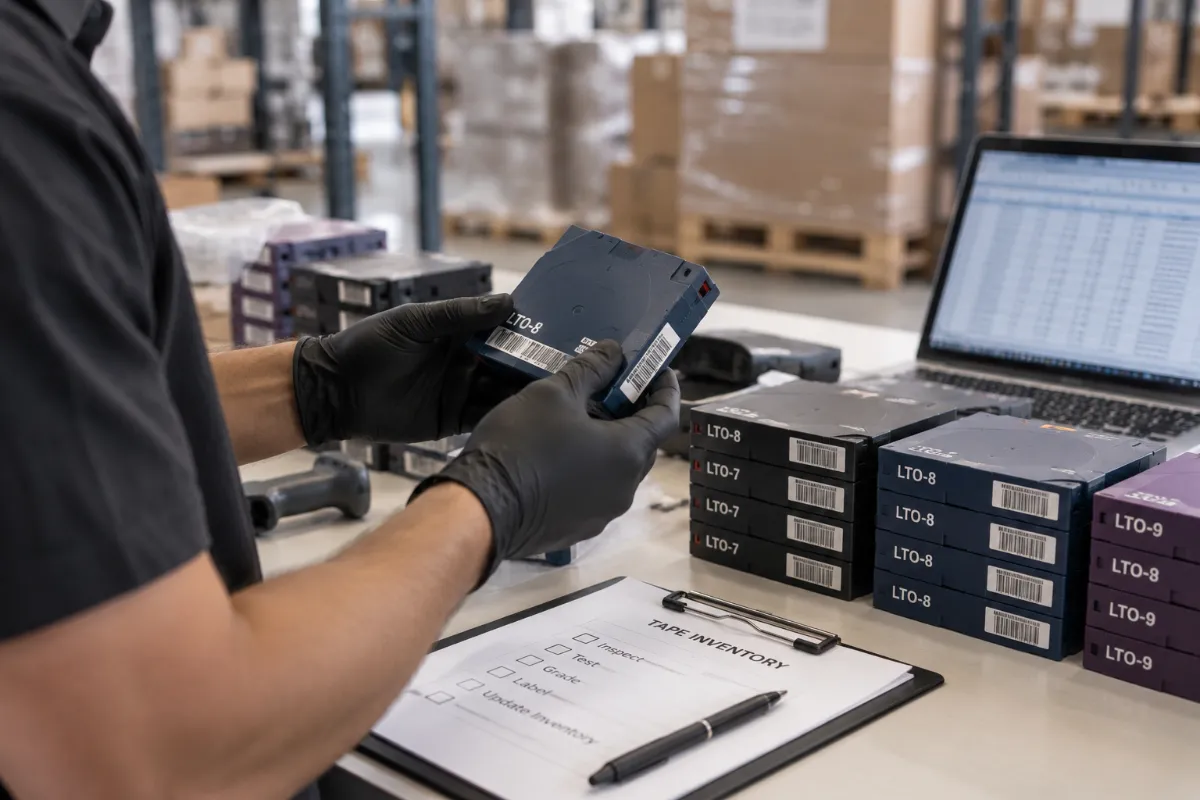
Should You Throw Away Old LTO Tapes?
No. Data-bearing enterprise storage media should never get treated like ordinary trash. Before you decide what to do with it, work through these questions:
- Does the media still have resale value?
- Does it contain sensitive information?
- What sanitization requirements apply?
- Is reuse or resale permitted under your policies?
- Is recycling or physical destruction required instead?
- What documentation should you retain?
Answering these in order helps you avoid destroying media that still has value, while making sure you handle sensitive data responsibly. Our Phoenix Certified data destruction process covers exactly this, with full chain-of-custody tracking and a Certificate of Data Destruction for your records.
How Do You Find Out What Your LTO Tapes Are Worth?
Start by building a basic inventory. Record:
- Generation: LTO-5, LTO-6, LTO-7, LTO-8, LTO-9, or LTO-10
- Brand: IBM, HPE, Fujifilm, Quantum, Sony, or another manufacturer
- Quantity: Total number of cartridges
- Condition: New, sealed, open-box, or used
- Type: Rewritable or WORM
- Location: Where the tapes are currently stored
Then take several clear photographs. For a large inventory, include photos showing entire boxes, cases, shelves, or pallets — this helps speed up your evaluation.
Can Tape Drives and Tape Libraries Be Worth Money Too?
Yes. When companies upgrade LTO generations, they often retire more than just cartridges. Other equipment worth evaluating includes:
- Tape drives and automated tape libraries
- Expansion modules
- Servers
- Storage arrays
- Hard drives
- Networking equipment
Evaluate your complete environment rather than looking at cartridges alone — bundling everything together often makes the process faster and more worthwhile.
Frequently Asked Questions
Are LTO-5 and LTO-6 tapes still worth anything?
Yes, in many cases. Older generations like LTO-5 and LTO-6 can still hold value in legacy environments where organizations continue to run drives built for those generations.
What determines used LTO tape value the most?
Generation typically matters most, since it drives both capacity and drive compatibility. Quantity, condition, and cartridge type also play a significant role in your final offer.
Is LTO-10 compatible with older tapes?
No. LTO-10 drives read and write LTO-10 media only, with no backward compatibility to LTO-9 or earlier generations. This is a change from LTO-9, which can read and write both LTO-8 and LTO-9 media.
Should I sell or destroy my old LTO tapes?
That depends on your data sanitization requirements and whether the media still has resale value. Work through both questions separately — sanitization needs don’t automatically mean the physical media is worthless.
What information do I need to get a quote for my LTO tapes?
Provide the generation, manufacturer, quantity, condition, type (rewritable or WORM), location, and clear photographs. This gives us what we need to send you an accurate evaluation quickly.
Find Out What Your Used LTO Tapes Are Worth
If your organization has surplus LTO tapes, We Buy Used IT Equipment can evaluate your inventory. Get a quote today, and share the generation, manufacturer, quantity, condition, location, and photographs. Before recycling valuable enterprise storage media, find out whether there’s an opportunity to recover value from it first.