When LTO backup tapes reach the end of their useful life, your organization has to decide what happens next. Should you sell them, reuse them, recycle them, sanitize them, or destroy them physically? The right answer depends on two things: the condition and potential resale value of the media, and how sensitive the information stored on it is.
What Is LTO Tape Recycling?
LTO tape recycling means processing retired magnetic tape cartridges and their components through an appropriate recycling or recovery process once the media no longer has reuse or resale value. But recycling is only one piece of disposition. Since LTO tapes hold data, you need to address data security before you send the physical material off for recycling.
Can You Recycle LTO Tapes?
Yes. Cartridges that no longer have reuse or resale value often have recycling options. Before you recycle anything, though, work through these questions first:
- Does the media contain sensitive data?
- Do the tapes still have resale value?
- Is reuse permitted under your policies?
- What sanitization requirements apply?
- Is physical destruction required?
- How will you document the disposition?
Don’t make the recycling decision separately from the data-security decision. The two need to happen together.
Should You Sell or Recycle Used LTO Tapes?
If your cartridges have secondary-market value, selling them lets you recover value from equipment you no longer need. If there’s no practical reuse or resale market, recycling makes more sense.
A simple disposition hierarchy works well here: Evaluate → Secure → Reuse/Resell → Recycle/Destroy. Following this order prevents you from destroying potentially valuable equipment unnecessarily, while still keeping data security at the center of the decision. For a deeper look at what determines resale value by generation, visit our LTO tape buyback hub.
Why Does Data Security Matter With Backup Tapes?
A single LTO cartridge can hold a surprising amount of enterprise information, depending on how it was used:
- Customer databases
- Employee records
- Financial information
- Healthcare information
- Email archives
- Intellectual property
- System backups
- Business records
- Application data
Deleting a backup job or pulling a tape from inventory doesn’t remove the information physically stored on the cartridge. That data stays put until you actively sanitize or destroy the media.
What Is Media Sanitization?
Media sanitization addresses access to the information stored on your media. NIST defines it as a process that makes accessing target data infeasible for a given level of effort.
The current federal guidance is NIST Special Publication 800-88 Revision 2, Guidelines for Media Sanitization, published in September 2025. Revision 2 shifts the emphasis toward building an organizational media-sanitization program and selecting methods and controls based on how sensitive your information is and what your disposition requirements are. Our Phoenix Certified data destruction process follows this current standard, with full chain-of-custody tracking and documentation.
What’s the Difference Between Sanitization and Physical Destruction?
Don’t treat these two as interchangeable. Sanitization makes target information inaccessible to the required security standard. Physical destruction renders the storage media itself unusable.
Which one you need depends on your organization’s security requirements and what you intend to do with the media afterward. If you want to resell or reuse the cartridge, destroying it obviously eliminates that option entirely.
Can You Degauss LTO Tape?
Since LTO uses magnetic media, degaussing can be relevant in certain sanitization and destruction scenarios. That said, degaussing typically renders an LTO cartridge unusable afterward. So before you choose a method, figure out what outcome you actually need. If resale or reuse is your goal, a destructive process like degaussing eliminates any residual asset value.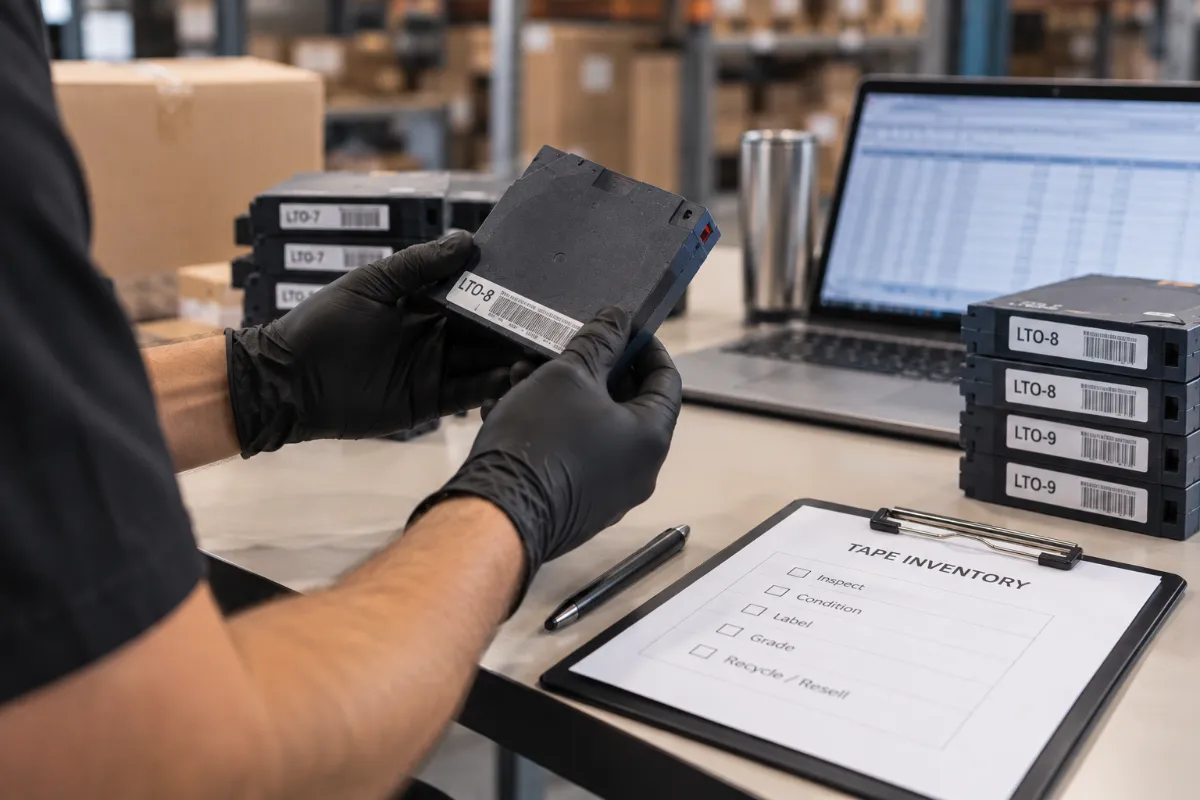
What Should You Do Before Disposing of Backup Tapes?
Build a documented workflow instead of making one-off decisions. Here’s a process that works:
- Inventory the media. Identify LTO generation, quantity, manufacturer, cartridge type, location, and condition.
- Determine data sensitivity. Figure out what type of information could exist on the cartridges.
- Confirm retention requirements. Verify the information is actually eligible for disposition.
- Determine resale value. Before you destroy an entire inventory, check whether the physical media has secondary-market value.
- Select the appropriate sanitization process. Base this on your security requirements and applicable standards.
- Select the final disposition. Depending on the outcome, media may get reused, resold, recycled, or destroyed.
- Document the process. Keep records that match your organization’s compliance and security requirements.
What About Large Data Center Tape Inventories?
Large data centers can accumulate thousands of cartridges over time. A full disposition project often involves more than just tape:
- LTO tapes
- Tape drives and tape libraries
- Servers
- Storage arrays
- Hard drives
- SSDs
- Networking equipment
- Racks and other infrastructure
Evaluating these assets together, rather than one at a time, often uncovers value that blanket recycling or destruction would otherwise erase.
Frequently Asked Questions
Can I sell LTO tapes that still have data on them?
Not until you’ve addressed data security first. Determine your sanitization requirements based on NIST SP 800-88 Revision 2 and your organization’s policies before you sell, reuse, or recycle any data-bearing tape.
Does degaussing destroy LTO tape resale value?
Yes, in most cases. Degaussing typically renders the cartridge unusable, so if you want to resell or reuse your tapes, choose a sanitization method that preserves the physical media instead.
How do I know if my LTO tapes have resale value?
Value depends on generation, quantity, brand, condition, and current market demand. Before recycling or destroying your inventory, get it evaluated to find out.
Should I recycle every LTO tape my organization retires?
Not necessarily. Follow the Evaluate → Secure → Reuse/Resell → Recycle/Destroy hierarchy so you don’t recycle or destroy tapes that still have resale value.
Can I sell tape drives and libraries along with my cartridges?
Yes. If you’re retiring your full tape environment, you can evaluate drives, libraries, and other data center hardware alongside your cartridges in the same disposition project.
Sell or Responsibly Dispose of Your LTO Tape Inventory
Before you recycle an inventory of LTO tapes, find out whether the media has resale value. We Buy Used IT Equipment works with businesses evaluating surplus LTO media and other enterprise IT assets. Get a quote and provide your tape generation, quantity, condition, location, and photographs to begin the evaluation process.