Unearthing hidden treasures in an ancient site requires meticulous planning, patience, and expertise. Similarly, data center decommissioning involves carefully identifying valuable IT assets, ensuring their responsible disposal while maximizing ROI. Just as archaeologists sift through layers of earth to find valuable artifacts, IT professionals must navigate the complex decommissioning process to uncover and repurpose valuable data center equipment.
Data center decommissioning is a critical process for companies aiming to responsibly phase out old data center assets. This process not only helps in data destruction and ensuring data security but also contributes to the financial health of the organization by maximizing the return on investment through asset recovery and resale.
In 2022, the world generated approximately 62 million metric tons of electronic waste. Factors such as increased consumer spending power and the widespread availability of electronics have driven this surge in e-waste, making it the fastest-growing waste stream globally. This trend is expected to continue, with annual e-waste generation projected to reach 82 million metric tons by 2030.
Proper and secure IT asset disposition is essential in mitigating the environmental impact of e-waste and ensuring sustainable practices.
In this article, we’ll review the importance of data center decommissioning, how to plan your strategy, maximize ROI, ensure compliance, and the role of professional services. We’ll help you understand the critical steps and best practices for a successful decommissioning project.
The Importance of Data Center Decommissioning
Data center decommissioning plays a crucial role in the lifecycle of IT assets, ensuring that organizations can effectively manage risks and recover asset value. The strategic significance of decommissioning lies in its ability to mitigate potential risks associated with outdated data center equipment, such as data breaches, and to recover value from IT assets that are no longer in use.
Risk Management: Proper data center decommissioning is essential for managing risks associated with sensitive data stored on storage devices. By implementing a structured decommissioning process, you can ensure that data erasure and data sanitization are carried out effectively, preventing unauthorized access to sensitive information. This is critical in avoiding data breaches and ensuring compliance with data protection regulations.
Asset Value Recovery: Another significant aspect of data center decommissioning is the recovery of value from data center assets. Through processes such as asset recovery and resale, you can reclaim value from IT equipment. Components that are still functional can be refurbished and repurposed, contributing to the organization’s financial health.
Partnering with a reputable ITAD service provider can enhance the financial returns from decommissioned assets by ensuring that they are resold or recycled responsibly.
Financial Benefits: Decommissioning outdated IT assets can lead to significant cost savings. By reselling or repurposing usable components, you can offset the costs of new equipment purchases. Additionally, avoiding fines and penalties associated with improper disposal of data center equipment can further contribute to cost savings.
Environmental Benefits: Proper data center decommissioning also offers environmental benefits. By responsibly recycling e-waste, you can reduce the environmental footprint. This process ensures that hazardous materials found in IT equipment are handled appropriately, preventing them from contaminating the environment.
According to the EPA, recycling one million laptops can save the same amount of energy that more than 3,500 U.S. homes use in one year.
Planning Your Decommissioning Strategy
An effective decommissioning strategy requires meticulous planning and coordination to ensure compliance with legal and corporate data security standards. Here’s a step-by-step guide to help you navigate this complex process:
Set clear objectives: Begin by defining the goals of your decommissioning project. Are you aiming to maximize the resale value of your IT assets? Is data security your primary concern? Establishing clear objectives will help your strategy and ensure all stakeholders are aligned.
Develop a Timeline: Create a detailed timeline for your data center decommissioning process. This should include key milestones such as inventory assessment, data erasure, equipment removal, and final disposition. A well-structured timeline helps prevent disruptions and minimizes downtime.
Assemble the Right Team: Involve the right stakeholders from the start. This includes IT staff, data security experts, and project managers. Each team member should have clearly defined roles and responsibilities to ensure a seamless decommissioning process.
Conduct a Detailed Inventory: Perform a comprehensive inventory of all data center equipment. Document the condition, specifications, and potential value of each asset. This detailed inventory will serve as the foundation for your decommissioning plan.
Ensure Compliance with Data Security Standards: Adhere to legal and corporate data security standards to protect sensitive information. Implement robust data destruction methods, such as sanitization and erasure, to permanently remove all sensitive information from storage devices. Compliance with regulations like GDPR and HIPAA is crucial.
Plan for Equipment Removal and Logistics: Coordinate the physical removal of data center assets. This includes arranging transportation, pallets, and other logistics to ensure safe and efficient removal. Working with a professional decommissioning service can help streamline this step.
Maximize Value through Asset Recovery and Resale: Evaluate the potential for asset recovery and resale. Identify components that can be refurbished or repurposed to maximize their value. Partnering with a reliable ITAD provider can enhance your financial returns.
Document the Process: Keep thorough records of the entire decommissioning process. This documentation will be crucial for compliance audits and future reference. It also provides transparency and accountability throughout the project.
Data Center Decommission Planning Checklist
A strong decommission plan should be practical, documented, and easy for every stakeholder to follow. Use this checklist before equipment is powered down, removed, shipped, or resold.
| Planning Step | What To Confirm | Why It Matters |
|---|---|---|
| Define project scope | Locations, rooms, cages, racks, asset classes, and shutdown dates | Prevents missed equipment and surprise delays |
| Assign stakeholders | IT, security, facilities, finance, procurement, compliance, and vendor contacts | Keeps approvals and communication moving |
| Build the asset inventory | Make, model, serial number, asset tag, condition, configuration, and data-bearing status | Supports resale value, chain of custody, and audit readiness |
| Classify data risk | Drives, SSDs, tapes, servers, storage arrays, networking gear, and backup systems | Determines sanitization or destruction requirements |
| Confirm regulatory needs | HIPAA, GLBA, FERPA, GDPR, CCPA, contract terms, and internal policies | Reduces legal, privacy, and audit exposure |
| Plan logistics | Access windows, badges, dock access, pallets, freight, lift gates, and site rules | Prevents removal-day delays and added labor costs |
| Choose disposition paths | Resale, reuse, donation, certified recycling, data erasure, or physical destruction | Maximizes value while keeping non-usable assets controlled |
| Capture documentation | Chain of custody, inventory reports, certificates, photos, and final reconciliation | Gives leadership and auditors a complete project record |
Before the first rack is touched, decide who has authority to approve changes, who signs off on data destruction, and who receives final documentation. Those small decisions prevent costly confusion once the project is underway.
Maximizing ROI through Asset Recovery and Resale
Effective data center decommissioning not only ensures compliance and environmental responsibility but also presents a valuable opportunity for asset recovery and resale. Here’s how you can maximize ROI through these processes:
Evaluation of Reusable Components
Start by conducting a thorough evaluation of your data center equipment to identify reusable components. This involves assessing the condition and functionality of IT assets such as servers, routers, storage devices, and networking equipment. Components that are still in good working condition can often be refurbished or repurposed for further use, thereby extending their lifecycle and value.
Resale of Valuable Equipment
A study by the National Association for Information Destruction (NAID) found that 40% of resold devices still contained personal information. This underscores the importance of thorough data destruction before recycling or reselling any device.
Once the reusable components are identified, the next step is to resell the valuable equipment. This not only generates revenue but also contributes to sustainability by reducing e-waste. The resale process includes:
Market Research: Determine the current market value of your IT equipment by researching similar items on online marketplaces and consulting with ITAD providers.
Listing and Marketing: Create detailed listings for the equipment, highlighting key specifications, conditions, and potential uses. Use platforms such as eBay, Amazon, and specialized IT equipment resale websites.
Negotiation and Sale: Engage with potential buyers to negotiate the best possible price. Ensure that all sales activities comply with data security and environmental regulations.
Partnering with the Right IT Equipment Buyer
Partnering with a reputable IT equipment buyer can significantly enhance the financial returns from decommissioned assets. A professional ITAD service provider offers several advantages:
Expert Valuation: They can provide accurate valuations based on current market trends, ensuring you receive fair compensation for your assets.
Secure Handling: They ensure that all sensitive data is securely wiped from the equipment, protecting your organization from potential data breaches.
Comprehensive Services: Many ITAD providers offer additional services such as data sanitization, data destruction, and environmentally responsible electronics recycling.
Cost-Saving Tips for Data Center Decommissioning
A decommission project can become expensive when teams wait too long to plan, underestimate labor, or treat asset recovery as an afterthought. The right process can lower project costs and improve net recovery.
Start Value Recovery Before Equipment Is Removed
Do not wait until hardware is sitting on a pallet to ask what it is worth. Identify high-value equipment early, including servers, storage arrays, switches, routers, memory, CPUs, GPUs, and backup systems. Early valuation helps finance teams decide what should be resold, reused, donated, recycled, or destroyed.
Avoid Paying Twice For Logistics
Uncoordinated removal can create extra freight, labor, storage, and handling fees. Consolidate equipment by site, asset type, and disposition path before pickup. For larger projects, use one provider that can manage data center liquidation, logistics, asset reporting, and data destruction together.
Keep Accessories With The Equipment
Rails, bezels, power supplies, cables, caddies, optics, line cards, and controllers can affect resale value. Label and pack these items with the correct systems whenever possible. Missing components can lower offers or create delays during verification.
Separate Reusable Assets From Scrap Early
Not every asset should go down the same path. Working systems may have resale value, while damaged or obsolete equipment may be better suited for certified recycling. Sorting early keeps valuable equipment from being handled like scrap.
Document Everything The First Time
Poor documentation creates hidden costs. Missing serial numbers, unclear custody records, and incomplete data destruction proof can force teams to repeat work. A clean inventory and documented chain of custody help reduce rework and support audit requests.
Regulatory Requirements to Review Before Decommissioning
Data center decommissioning is not just an equipment-removal project. It can involve privacy laws, security standards, environmental rules, internal governance, and customer contract requirements. This section is not a substitute for legal counsel, but it gives IT and procurement teams a practical starting point.
Data Security and Media Sanitization
Data-bearing assets should be sanitized or destroyed based on data sensitivity, media type, and business risk. NIST SP 800-88 Rev. 2 defines media sanitization as a process that makes access to target data infeasible and provides guidance for Clear, Purge, and Destroy decisions.
Healthcare Data and HIPAA
Healthcare organizations must consider HIPAA when retired equipment may contain electronic protected health information. The HIPAA Security Rule requires administrative, physical, and technical safeguards to protect ePHI, which makes secure handling, documentation, and destruction records especially important during decommissioning.
Financial Data and GLBA
Financial institutions and related businesses may need to account for the Gramm-Leach-Bliley Act. The FTC explains GLBA as a requirement for covered financial institutions to safeguard sensitive customer data. If retired servers, laptops, tapes, or storage systems contain customer information, data destruction and chain-of-custody documentation should be built into the project.
Education Records and FERPA
Schools, universities, and education technology teams should consider FERPA when equipment may contain student records or personally identifiable information. The U.S. Department of Education states that FERPA gives parents and eligible students rights over education records, including control over disclosure of personally identifiable information from those records.
Privacy Laws and Customer Data
Organizations may also need to consider GDPR, state privacy laws such as the California Consumer Privacy Act, and contractual data protection obligations. These requirements can affect how long data is retained, how it is deleted, what documentation is needed, and which vendors are approved to handle retired assets.
Environmental and Recycling Rules
Electronics may include valuable materials and regulated components that should not be mishandled. The EPA recommends donating or recycling electronics safely and correctly to conserve resources and avoid pollution. Working with a certified ITAD and recycling provider helps organizations support responsible disposal and sustainability goals.
Ensuring Compliance and Data Security
Ensuring compliance and data security during data center decommissioning is critical to protect sensitive information and adhere to legal standards.
Best Practices for Data Destruction
Let’s take a look at some of the best practices for data destruction and hardware disposal to comply with regulations such as GDPR, HIPAA, and EPA guidelines.
Data Erasure: Use certified software tools to overwrite existing data on storage devices multiple times, ensuring that all sensitive data is irretrievable.
Data Sanitization: Implement a thorough data sanitization process to permanently destroy data stored on hard drives and other devices. This includes degaussing magnetic storage devices and using cryptographic erase for SSDs.
Physical Destruction: For hardware that cannot be sanitized, employ physical destruction methods such as shredding or crushing to ensure data is permanently destroyed. This is especially important for IT assets that store critical data.
Hardware Disposal Compliance
Environmental Regulations: Adhere to EPA guidelines for the disposal of electronic waste to minimize environmental impact. This includes ensuring that e-waste is handled by certified recyclers who follow responsible recycling practices.
Chain of Custody: Maintain a documented chain of custody for all data center assets being decommissioned. This ensures accountability and traceability throughout the decommissioning process, from initial assessment to final disposal.
Role of Certified Professionals
Certified professionals play a crucial role in ensuring compliance and data security. They bring expertise in data protection laws and industry standards, ensuring that all data is securely wiped and hardware disposal adheres to environmental regulations. Certified IT asset disposition providers like We Buy Used IT Equipment offer comprehensive services, including data destruction, data erasure, and responsible recycling.
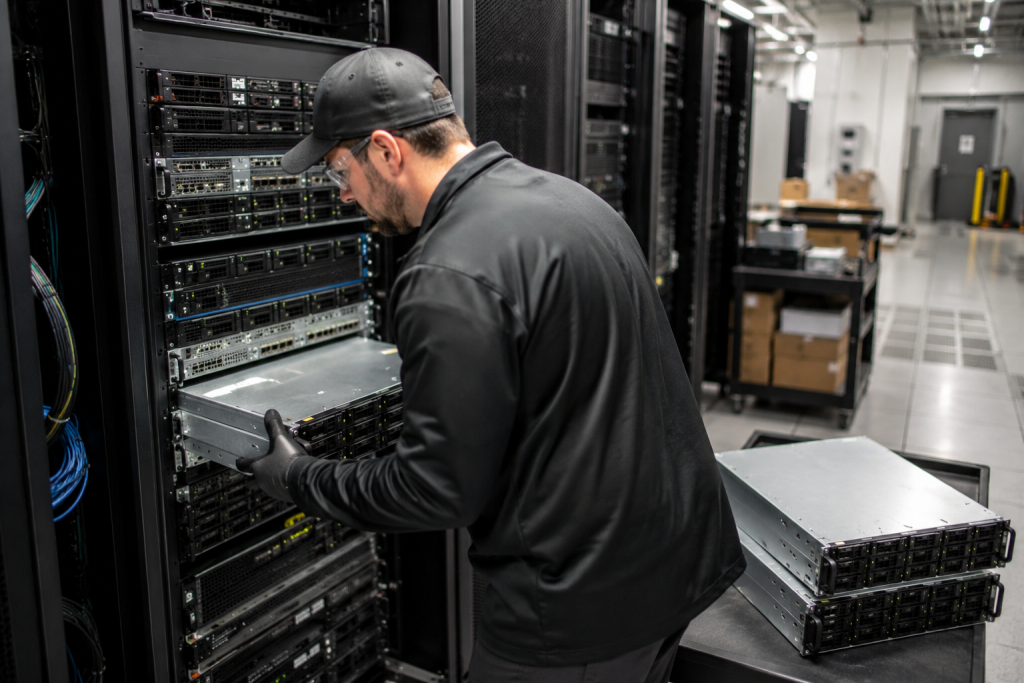
The Role of Professional Decommissioning Services
Engaging professional decommissioning services offers significant benefits for organizations looking to handle complex data center decommissioning projects efficiently and safely. Here are some of the key advantages of hiring professional services:
Efficiency and Safety in Complex Projects: Professional decommissioning services like We Buy Used IT Equipment bring expertise and experience to the table, ensuring that even the most complex decommissioning projects are handled with precision. These experts can manage the entire decommissioning process, from initial planning and inventory to the physical removal of data center equipment. This systematic approach minimizes downtime and ensures that all tasks are completed safely and efficiently.
Comprehensive Management from Logistics to Data Destruction: One of the primary benefits of such professional services is comprehensive management. These services handle every aspect of the project, including:
- Logistics: Coordinating transportation, pallets, and storage for decommissioned assets.
- Data Destruction: To protect sensitive information, implement secure data destruction methods, such as data erasure and physical destruction.
- Documentation: Maintaining detailed records of the decommissioning process to ensure compliance with legal and corporate standards.
Professional services manage these tasks, providing peace of mind and allowing you to focus on your core operation without worrying about the complexities of decommissioning.
Data Center Decommissioning FAQ
What is data center decommissioning?
Data center decommissioning is the planned process of retiring data center equipment, removing assets, sanitizing or destroying data-bearing media, recovering resale value, recycling non-usable hardware, and documenting the project from start to finish.
What should be included in a data center decommissioning checklist?
A data center decommissioning checklist should include project scope, asset inventory, stakeholder roles, data classification, shutdown timing, logistics, chain of custody, data destruction requirements, resale evaluation, recycling plans, and final reporting.
How do companies reduce data center decommissioning costs?
Companies can reduce costs by planning early, consolidating logistics, identifying resale-value assets before removal, keeping accessories with equipment, avoiding unnecessary storage, and using one provider for asset recovery, data destruction, and recycling.
What regulations apply to data center decommissioning?
Common requirements may include NIST 800-88 for media sanitization guidance, HIPAA for healthcare data, GLBA for financial customer information, FERPA for education records, GDPR or state privacy laws for personal data, and environmental rules for electronics recycling.
Why is chain of custody important during a decommission?
Chain of custody documents who handled each asset, when it moved, where it went, and how it was processed. This helps protect the organization during audits, compliance reviews, resale verification, and data destruction confirmation.
Partner with We Buy Used IT Equipment for Expert Decommissioning
Expert management in data center decommissioning is essential to maximize asset recovery and ensure compliance with industry regulations. By employing a professional decommissioning service, you can avoid potential pitfalls such as data breaches and improper disposal of IT assets, which can lead to hefty fines. Expert management ensures that data destruction and data sanitization are performed to the highest standards, protecting sensitive information and adhering to environmental guidelines.
We Buy Used IT Equipment can help you leverage expertise in seamless decommissioning services and align with your company goals. Our team is committed to delivering value through comprehensive asset recovery and responsible recycling, ensuring that all data center assets are managed with the utmost care and professionalism.
Partner with us to ensure that your data decommissioning process is handled expertly, efficiently, and in compliance with all relevant standards. We’re dedicated to delivering exceptional value and security in every project we undertake.