Short answer: Yes, in most cases. Government agencies can buy used and refurbished IT equipment when it fits agency policy, contract rules, and security requirements. It saves the most on servers, storage, spares, and end-user devices. Avoid internet-facing network gear that no longer gets vendor security updates, and always verify firmware, serial numbers, and data-wipe records.
Start here: See everything we offer public-sector buyers on our government IT equipment hub.
In this guide: Where it fits · Where it doesn’t · Savings · Security checks · Compliance · Vendor questions · FAQ
Where Used Equipment Makes Sense
- Servers and storage in non-edge roles. Internal servers, virtualization hosts, test and development systems, and backup or disaster recovery sites.
- Spares and upgrades. Memory, drives, power supplies, and parts for platforms you already run. This is often the easiest win.
- End-user devices. Laptops and desktops for staff, training labs, and temporary needs.
- Legacy compatibility. Some agencies run older systems that need specific models. Confirm the equipment can still get security updates, or isolate it behind compensating controls.
Browse our refurbished equipment and data center equipment, or read our guide to buying used servers and storage.
Where It Doesn’t
Internet-facing edge devices without vendor support. In February 2026, CISA issued Binding Operational Directive 26-02, which orders federal agencies to inventory and remove end-of-support edge devices, including firewalls, routers, switches, and wireless access points. In Verizon’s 2026 breach report, exploiting software vulnerabilities was the top way attackers got in, at 31% of breaches, and edge devices and VPNs made up 22% of those. For firewalls, VPN gateways, and routers, buy only models that still receive vendor security updates. Our guide to network security protection explains why.
Equipment you can’t verify. If a seller can’t document the source, serial numbers, and condition, skip it.
High-assurance environments. Systems with strict supply chain rules may rule out used equipment altogether. Check with your security authority.
Cases where policy requires new. Some purchasing rules, such as EPEAT or contract-specific requirements, may apply differently to used equipment. Ask your contracting office.
How Much Can Agencies Save?
Consumer guides report that refurbished electronics typically cost about 15% to 20% less than new. Enterprise gear is a different market. Savings vary widely by age, model, and condition, and older models often discount more.
Prices are also moving. According to recent market reports, server memory prices have roughly doubled from a year ago, and analysts don’t expect relief before 2027. Used equipment prices have risen too, so get quotes instead of assuming the savings. Warranty, testing, and documentation also affect the real price. See our warranty information.
Security Checks Before Used Gear Joins Your Network
Treat used equipment as untrusted until you verify it. Common practice is to:
- Match serial numbers to the invoice and your records.
- Inspect for tampering and signs of counterfeit parts.
- Update firmware from vendor sources, and verify it where possible.
- Reset management controllers, change default credentials, and clear security chips.
- Wipe and reimage the system before it connects.
- Ask for the previous owner’s data sanitization record. A Certificate of Data Destruction shows prior data was properly removed.
Our data sanitization guide covers the details.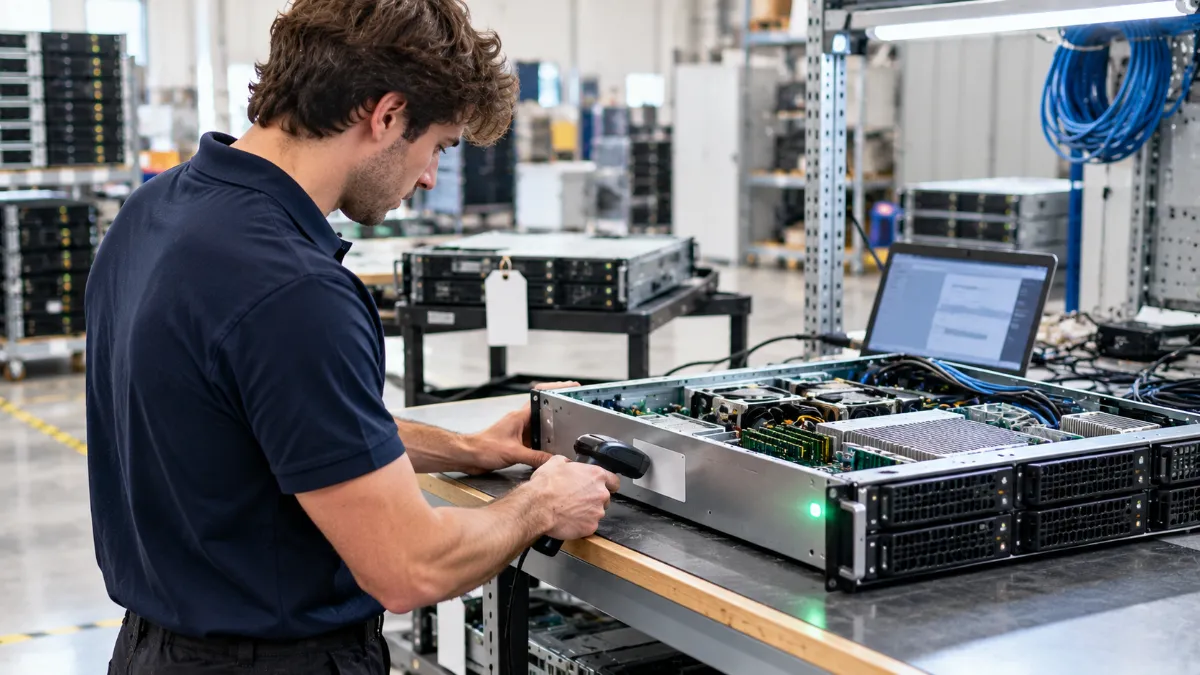
Compliance Checklist
Requirements vary by agency and data type. Examples that often apply:
- FISMA and NIST SP 800-53. The media sanitization control (MP-6) points to NIST SP 800-88, now in Revision 2, published September 2025. Revision 1 was withdrawn.
- CJIS Security Policy, for agencies handling criminal justice information.
- IRS Publication 1075, for agencies handling federal tax information.
- HIPAA, for health-related agencies.
- State privacy and records-retention laws.
Ask your contracting office about:
- Section 889 of the NDAA, which restricts certain telecommunications and video surveillance equipment in federal procurement.
- Trade Agreements Act (TAA) compliance for federal purchases.
- Counterfeit part prevention and supply chain risk management.
- Excess property rules. Federal agencies generally must consider excess property from other agencies before buying new, and state and local agencies have their own surplus programs.
Sustainability: What the Evidence Shows
Most of a device’s environmental footprint comes from making it, so using hardware longer avoids that impact. The U.S. EPA recommends extending the life of electronics through reuse, and its Buying Green for Federal Purchasers page covers federal guidance. Some states run their own programs, such as Massachusetts’s EPP Procurement Program.
For scale, the UN’s 2024 Global E-waste Monitor found that the world generated 62 million tonnes of e-waste in 2022, and only 22.3% was documented as properly collected and recycled.
A caution on the numbers: the Environment America factsheet reports that refurbished smartphones cut environmental impact by 77% to 91%. That’s a smartphone figure. Data for servers and networking gear is thinner, though the logic holds.
8 Questions to Ask Any Used-Equipment Vendor
- Where does the equipment come from, and can you document it?
- How do you test and refurbish it, and what records do you keep?
- What warranty and support come with it?
- Does it still receive vendor security updates?
- Can you provide data sanitization proof and chain-of-custody records?
- Can you support Section 889 and TAA requirements?
- Which certifications do you hold, such as R2v3, NAID AAA, or ISO standards?
- Are you registered to do business with government, and can you give references?
Our references page shows who we’ve worked with, and our partner DES Technologies lists its certifications.
What We Offer Agencies
At We Buy Used IT Equipment, we help government buyers find tested equipment, and we handle data security on the way out too. Everything starts on our government industry hub.
- Documented data security. We follow NIST SP 800-88 practices through our Phoenix Certified process and issue a Certificate of Data Destruction for equipment we process.
- Chain of custody. See our ITAD process and DES’s chain of custody approach.
- Responsible recycling. Equipment without resale value goes to R2v3-certified electronics recycling.
Retiring Your Own Equipment
Disposal rules differ by jurisdiction. Federal agencies generally follow GSA excess and surplus property procedures, and state and local agencies follow their own surplus rules. Check with your property management office before you sell, donate, or recycle anything.
Whatever the route, sanitize data first following NIST SP 800-88 Revision 2, using certified data erasure or physical data destruction. Our guide to secure IT equipment disposal walks through the steps.
Frequently Asked Questions
Can government agencies buy used IT equipment?
Often, yes, subject to agency policy, contract vehicles, and compliance requirements. Confirm with your contracting officer or procurement office before you buy.
Is used IT equipment secure?
It can be, with verification. Match serial numbers, inspect for tampering, update firmware from vendor sources, reset management controllers, and wipe or reimage the system before it connects. Ask for the previous owner’s data sanitization record.
How much can an agency save?
It varies. Consumer guides report about 15% to 20% savings on refurbished electronics. Enterprise savings depend on age, model, and condition, and used prices have risen with the market. Get quotes.
Is used networking gear safe to deploy?
For internal, supported equipment, usually yes. For internet-facing devices like firewalls, routers, and VPN gateways, buy only models that still receive vendor security updates. CISA’s BOD 26-02 targets end-of-support edge devices.
What documents should a vendor provide?
Serial-numbered inventory, test results, warranty terms, data sanitization records, a Certificate of Data Destruction where applicable, and chain-of-custody documentation.
Can an agency sell its old equipment?
It depends on your rules. Federal agencies generally follow GSA excess and surplus procedures, and state and local agencies follow their own surplus rules. Check with your property office, and sanitize data first.
Next Step
Need a quote or a second opinion on a purchase? Contact us, see our FAQ, or head back to the government IT equipment hub to see all our public-sector services.