Old IT equipment creates three problems at once: it takes up space, it may still hold sensitive data, and it can become an environmental liability if it is handled the wrong way.
That is why computer and IT equipment recycling is no longer just a cleanup task. For businesses, schools, healthcare teams, government agencies, and data centers, recycling has become part of a larger IT lifecycle strategy. The right partner helps you protect data, meet compliance expectations, recover value, and keep retired electronics out of the waste stream.
We Buy Used IT Equipment provides secure, business-focused electronics recycling services for organizations that need more than a basic drop-off option. Whether you have a few pallets of laptops or a full data center project, the goal is the same: make recycling simple, documented, and responsible.
Quick Answer: What Is IT Equipment Recycling?
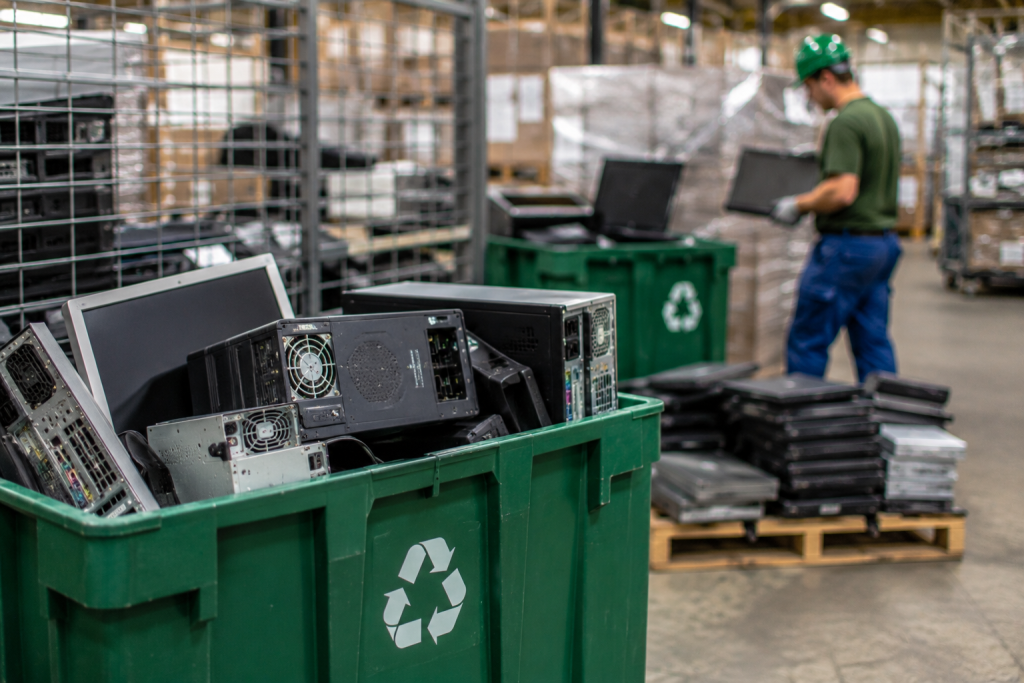
IT equipment recycling is the secure process of collecting, sorting, sanitizing, reusing, reselling, or responsibly recycling retired business technology. A professional recycling program should protect sensitive data, document the chain of custody, recover value from usable equipment, and recycle end-of-life electronics through responsible downstream channels.
The Benefits of IT Equipment Recycling
The biggest benefits of IT equipment recycling are security, space recovery, compliance support, asset value recovery, and environmental responsibility.
When equipment is retired properly, your organization can:
- Clear out offices, storage rooms, server closets, and data centers
- Reduce data exposure from old drives, SSDs, tapes, and devices
- Recover value from reusable hardware
- Support ESG and sustainability goals
- Maintain records for internal audits and vendor reviews
- Avoid careless disposal of electronics that may contain regulated materials
The EPA notes that electronics contain valuable resources such as metals, plastics, and glass, and that donating or recycling electronics helps conserve natural resources and avoid pollution. For businesses, the value is even broader. Secure recycling protects the organization while giving retired equipment a managed path forward.
What Types of Equipment Can Be Recycled?
Most business technology can be recycled, reused, remarketed, or processed through a certified ITAD workflow. The best path depends on age, condition, demand, configuration, and whether the device stores data.
| Equipment Type | Examples | Common Recycling or Recovery Path |
|---|---|---|
| Computers and endpoints | Laptops, desktops, workstations, tablets, thin clients | Reuse, resale, parts harvesting, or certified recycling |
| Servers and components | Rack servers, blade servers, CPUs, memory, power supplies | Asset recovery, resale, component recovery, recycling |
| Data storage | Hard drives, SSDs, storage arrays, tape libraries, backup tapes | Data erasure, physical destruction, resale, or recycling |
| Networking equipment | Switches, routers, firewalls, access points, optics | Resale, refurbishment, parts recovery, recycling |
| Telecom and office IT | VoIP phones, PBX systems, conference gear, peripherals | Reuse, resale, recycling |
| Displays and monitors | LCD monitors, laptops, tablets, smart displays | Covered electronic waste handling where applicable |
| Infrastructure equipment | UPS units, PDUs, cables, racks, cabinets | Reuse, resale, metal recovery, certified recycling |
If you are unsure whether a device should be sold, reused, destroyed, or recycled, We Buy Used IT Equipment can review your inventory and recommend a practical disposition path.
Understanding the Recycling Process
A professional IT recycling process is structured. It should not feel like equipment disappears into a mystery truck.
1. Inventory Review
You share an equipment list, photos, location, quantities, and project requirements. For larger projects, this may include serial numbers, asset tags, rack locations, or pallet counts.
2. Sorting and Valuation
The equipment is evaluated for resale, reuse, parts recovery, data destruction, or recycling. This step helps separate valuable assets from true end-of-life equipment.
3. Secure Logistics
Depending on the project size, equipment may be shipped, palletized, picked up, or handled as part of a larger data center decommissioning project.
4. Data Destruction
Data-bearing media is processed through approved methods such as software erasure, cryptographic erase, degaussing, shredding, crushing, or other destruction methods based on the device and data risk.
5. Reuse, Resale, or Recycling
Working equipment may be remarketed. Parts may be recovered. Non-usable electronics move through certified recycling channels.
6. Reporting and Documentation
Business recycling projects should include records such as inventory reports, chain-of-custody details, certificates of data destruction, recycling documentation, and final reconciliation when applicable.
Certified IT Recycling vs. Curbside Recycling
Curbside recycling is not built for enterprise IT equipment. It is designed for common household materials, not business devices that may contain confidential data, regulated components, batteries, storage media, network configurations, or resale value.
Certified IT recycling differs from curbside recycling in several important ways:
- It includes secure handling for data-bearing devices
- It supports chain of custody and audit trails
- It separates reusable assets from end-of-life equipment
- It can provide certificates of data destruction
- It helps recover value from equipment with resale demand
- It follows responsible downstream recycling practices
- It can handle bulk lots, data centers, and multi-site projects
For an organization, the difference is risk. Throwing equipment into a generic recycling stream may clear space, but it does not prove that data was destroyed, assets were tracked, or electronics were processed responsibly.
Compliance and Security in Recycling
Compliance and security in recycling start with one simple question: could this device still contain sensitive data?
For many assets, the answer is yes. Laptops, servers, storage arrays, SSDs, hard drives, backup tapes, mobile devices, and even some networking hardware may contain business records, customer data, employee files, credentials, or configuration details.
The current NIST SP 800-88 Rev. 2 guidance explains media sanitization as a process that makes access to target data infeasible. It also helps organizations choose appropriate methods based on media type and data sensitivity.
Strong recycling programs should include:
- Documented chain of custody
- Data-bearing asset identification
- Secure transport and receiving controls
- NIST-aligned data erasure or destruction
- Certificates of data destruction when needed
- Responsible recycling for non-reusable assets
- Clear reporting for audits and compliance reviews
This matters for regulated industries such as healthcare, finance, education, government, and enterprise environments with strict internal security policies.
California E-Waste Laws and Rancho Cucamonga Businesses
For organizations in Rancho Cucamonga and the greater Southern California area, California e-waste rules add another layer of responsibility.
California’s Covered Electronic Waste Recycling Program was created under the Electronic Waste Recycling Act of 2003. CalRecycle explains that covered electronic devices include certain video display devices with screens greater than four inches, such as CRT monitors, LCD televisions, monitors, laptop computers, tablets, smart displays, portable DVD players, plasma displays, and OLED displays.
California also treats some electronics as hazardous when discarded because certain components may contain heavy metals or other regulated materials. CalRecycle notes that California’s program is implemented by CalRecycle, the Department of Toxic Substances Control, and the California Department of Tax and Fee Administration.
There is also a newer 2026 update to understand. CalRecycle states that Senate Bill 1215 adds covered battery-embedded products to the Covered Electronic Waste Recycling Program beginning January 1, 2026. That matters for devices with batteries that are not designed to be easily removed with common household tools.
The City of Rancho Cucamonga Household Hazardous Waste page lists accepted resident items such as computer components, monitors, TVs, printers, telephones, and related household electronics. It also states that business and nonprofit waste is not accepted at that facility. That distinction matters. Commercial IT recycling needs secure logistics, documentation, data destruction, and a provider that can handle business quantities, not just consumer drop-offs.
We Buy Used IT Equipment is based in Rancho Cucamonga, CA, and supports businesses throughout Southern California and nationwide with custom recycling, buyback, and ITAD solutions.
Feature-Rich Services by We Buy Used IT Equipment
The feature-rich services by We Buy Used IT Equipment are designed for organizations that need more than a simple recycling pickup.
Our recycling and ITAD support may include:
- Equipment buyback and asset recovery
- Bulk computer and laptop recycling
- Server, storage, and networking recycling
- Data destruction services
- Physical destruction for drives, tapes, and media
- Chain-of-custody documentation
- Data center takeout and liquidation
- Secure shipping and logistics
- Recycling for equipment with no resale value
- Inventory reporting and project coordination
That combination matters because most real projects are mixed. A company may have laptops with resale value, monitors that need proper e-waste handling, servers that need part-level recovery, and drives that require destruction. A single, coordinated process saves time and reduces risk.
Tailored Solutions for Complex Needs
No two recycling projects look the same. A school district may need to clear hundreds of laptops after a refresh. A healthcare system may need strict data destruction documentation. A data center may need rack-level decommissioning, freight coordination, and asset recovery. A small business may simply need a clean way to recycle outdated desktops and monitors.
We Buy Used IT Equipment builds tailored solutions for complex needs by looking at:
- Equipment type and quantity
- Data sensitivity
- Site access and logistics
- Timeline and project urgency
- Resale value potential
- Compliance documentation requirements
- Sustainability and recycling goals
- Whether assets should be sold, recycled, destroyed, or donated
Custom recycling solutions for every organization should make the project easier, not harder. The right partner helps your team avoid unnecessary steps, prevent missed assets, and get usable equipment into the right recovery channel.
Practical Example: A Mixed Office and Server Room Refresh
Imagine a company in Southern California replacing 150 laptops, 40 desktops, 20 monitors, two server racks, several switches, and a storage array.
A basic recycler might treat the entire project as waste. A certified IT recycling and ITAD partner would take a different approach:
- Laptops are evaluated for resale, reuse, or recycling
- Drives are erased or destroyed based on security requirements
- Monitors are handled under proper e-waste rules
- Servers are reviewed for resale and component recovery
- Networking equipment is tested for remarketing potential
- Storage media is tracked through chain of custody
- Final documentation is provided for internal records
That is the difference between disposal and lifecycle management.
How to Choose an IT Equipment Recycling Partner
Before you hand over business equipment, ask direct questions:
- Can you provide chain-of-custody documentation?
- Do you offer certified data destruction?
- Do you separate resale assets from scrap?
- Can you handle commercial quantities?
- Do you support pickup, freight, or secure shipping?
- Can you provide inventory reports?
- Do you understand California e-waste requirements?
- Can you support data center, enterprise, school, healthcare, or government projects?
If the answer is unclear, keep looking. IT recycling should give your organization confidence, not uncertainty.
Ready to Recycle IT Equipment Securely?
Computer and IT equipment recycling works best when it protects data, recovers value, supports compliance, and handles every asset through the right path.
If your organization has retired laptops, desktops, servers, storage, networking equipment, monitors, telecom hardware, or data center assets, We Buy Used IT Equipment can help you build a secure recycling and recovery plan.
Request a quote or contact We Buy Used IT Equipment to discuss your recycling project.
FAQ
What are the benefits of IT equipment recycling?
The main benefits of IT equipment recycling include reducing e-waste, protecting sensitive data, clearing storage space, recovering value from reusable hardware, supporting compliance, and improving sustainability reporting.
What types of computer and IT equipment can be recycled?
Businesses can recycle laptops, desktops, servers, hard drives, SSDs, storage arrays, switches, routers, firewalls, VoIP phones, monitors, tablets, tape media, UPS units, cables, and other enterprise IT equipment.
How is certified IT recycling different from curbside recycling?
Certified IT recycling includes secure data handling, inventory tracking, chain of custody, data destruction options, resale evaluation, and responsible downstream processing. Curbside recycling does not provide the same business security controls or documentation.
What California e-waste laws should Rancho Cucamonga businesses know?
California’s Electronic Waste Recycling Act created the Covered Electronic Waste Recycling Program for certain devices, including many displays, monitors, laptops, and tablets with screens over four inches. Beginning January 1, 2026, SB 1215 adds covered battery-embedded products to the program. Businesses should also consider data security, hazardous waste, and documentation requirements.
Does We Buy Used IT Equipment offer custom recycling solutions?
Yes. We Buy Used IT Equipment provides custom recycling, buyback, data destruction, logistics, and ITAD solutions for businesses, schools, healthcare organizations, government agencies, data centers, and SMBs.