
Blog

Whether you’re a business looking to recover value from retired assets or an individual hunting for affordable tech, our guides and insights help you make smarter decisions in the IT resale market.

Category: IT Asset Management

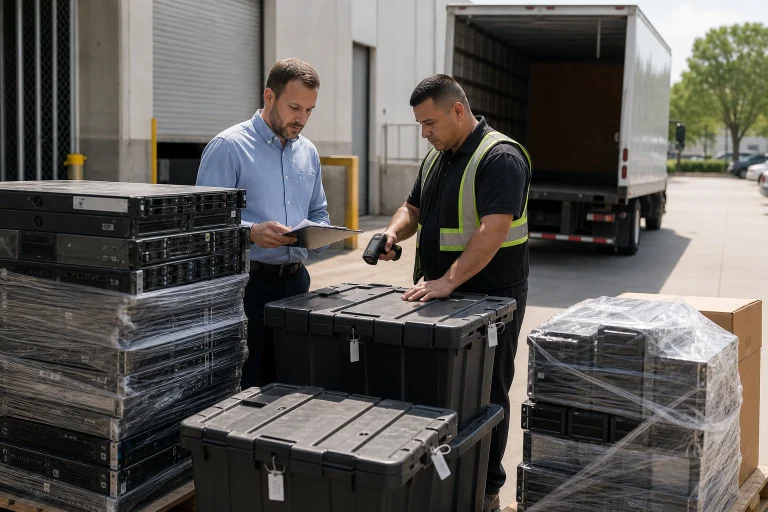
scanning and loading data equipment
Data Centers
Dakodah

How to Liquidate a Full Data Center or IT Asset Lot: A Step-by-Step Guide for IT Managers

Selling one server is simple. Liquidating a full rack, office closet, storage room, colo cage, or data center is a different project. A bulk IT asset lot may include many asset types. Common examples include servers, storage arrays, switches, routers, firewalls, drives, memory, CPUs, and GPUs. Lots may also include telecom hardware, backup tape, PDUs, racks, cables, and spare parts. Some assets may have strong resale value. Some may need data destruction. Some may only be fit for certified recycling.
Server room with IT comparison tools
IT Asset Management
Dakodah

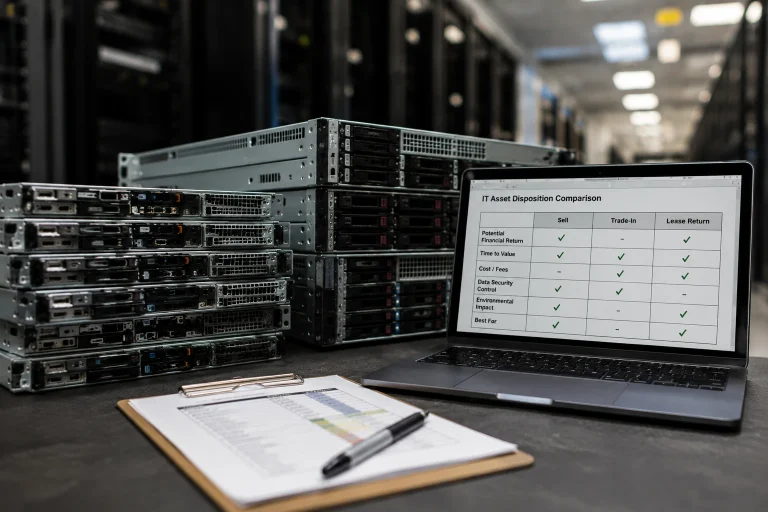
Sell, Trade-In, or Lease Return? Comparing Your Options for Retiring Enterprise IT Assets

Retiring enterprise IT equipment sounds simple until finance, procurement, security, and compliance all need different things from the same project. Your IT team wants the gear gone. Finance wants the best residual value. Compliance wants proof of secure data handling. Procurement may be weighing an OEM trade-in credit. And if the equipment is leased, the leasing company may expect the assets back in a specific condition by a specific date. That leaves one practical question: should you sell decommissioned gear

IT Equipment Refresh Cycle
IT Asset Management
Alex

Understanding the IT Equipment Refresh Cycle

In today’s fast-paced digital environment, staying technologically current isn’t optional — it’s essential. The IT equipment refresh cycle refers to the strategic process organizations use to retire, replace, and upgrade their hardware inventory. Done well, it unlocks productivity, enhances security, and lets businesses extract maximum value from their IT investments. Yet many organizations struggle with refresh planning, often reacting to device failure instead of proactively managing technology lifecycles. In this comprehensive guide, we break down what an IT equipment refresh

How ITAD Is Evolving
IT Asset Management
Alex

How ITAD Is Evolving: The Future of IT Asset Disposition in a Fast-Changing Technology Landscape

Understanding ITAD and Its Growing Importance Information Technology Asset Disposition (ITAD) refers to the policies, processes, and practices organizations use to securely and responsibly retire, recycle, resell, or repurpose IT equipment. As businesses continually refresh hardware and respond to environmental and regulatory pressures, ITAD has shifted from a compliance action to a strategic business function. In today’s world, ITAD is more than disposing of old computers. It involves secure data destruction, maximizing residual value, promoting sustainability, and protecting brand and

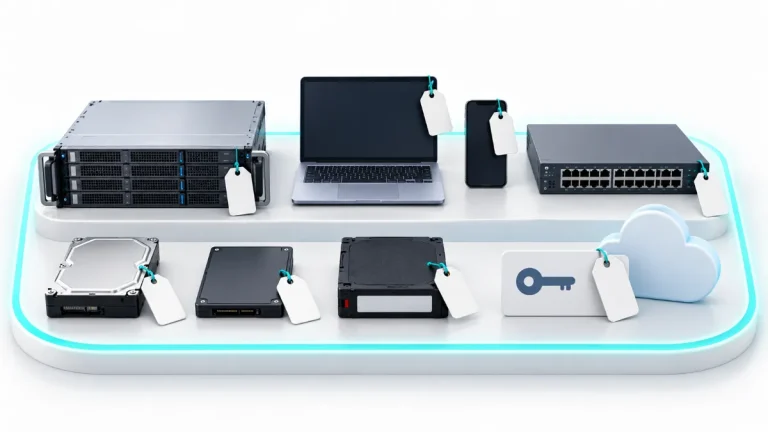
IT Hardware and Cloud Inventory
IT Asset Management
Alex

IT Asset Management Explained: What It Is and Why It Matters

Short answer: IT asset management (ITAM) is the process of tracking, securing, and optimizing every IT asset, from purchase to retirement. A good ITAM program keeps an accurate inventory, controls costs and licenses, supports audits, and ends with secure data destruction and resale or recycling. It protects data, cuts waste, and shows you what you actually own. Go deeper: See our IT asset management services, or browse the IT asset management category for more guides. In this guide: What counts

IT Asset Lifecycle Management
IT Asset Management
Alex

IT Asset Lifecycle Management: Integrating Asset Disposal, Buy‑Back & Recycling into Your IT Strategy

IT Asset Lifecycle Management: Integrating Asset Disposal, Buy-Back & Recycling into Your IT Strategy IT equipment is essential to business productivity, but it also has a defined lifespan. Hardware slows down, becomes incompatible with updated software, or reaches the end of its support lifecycle. When that happens, organizations are often left with a critical question: What should we do with outdated IT assets? This is where IT Asset Lifecycle Management plays a vital role. It’s not just about acquiring and

IT Asset Management: Get the Job Done Right, From Procurement to Disposal

The Strategic Imperative of IT Asset Management How well are you managing your technology investments from start to finish? In today’s digitally driven business landscape, IT equipment is everywhere, from desktop computers and mobile devices to enterprise servers, software platforms, and cloud services. However, far too many organizations treat it as an afterthought rather than a strategic asset. IT Asset Management (ITAM) is the holistic process for optimizing the entire asset lifecycle, from procurement and deployment to maintenance, renewal, and

IT Warehouse Equipment Inspection
IT Asset Management
Steven

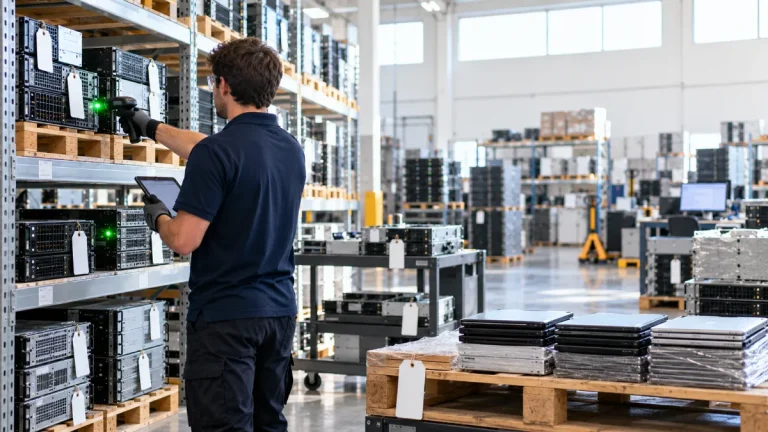
Secure IT Asset Disposal: What It Is and How to Do It Right

Short answer: Secure IT asset disposal is the process of retiring IT equipment without exposing your data or harming the environment. It means inventorying every device, erasing or destroying the data to NIST SP 800-88 Revision 2, tracking chain of custody, getting a Certificate of Data Destruction, and then reselling or recycling the equipment through certified channels. Explore the full service: See everything included in our IT asset disposition services, or visit our partner’s ITAD hub. In this guide: The

IT Asset Management
Steven

ITAD Best Practices for Small and Medium-Sized Businesses

Most small businesses have the same quiet problem. There’s a closet, a back room, or a shelf full of old laptops, a retired server, a copier, and a box of backup tapes. Nobody owns the pile, and nobody’s sure what’s on those devices. That pile is a risk. IBM’s 2025 Cost of a Data Breach Report puts the global average cost of a breach at $4.44 million, and $10.22 million in the United States. Retired hardware that still holds data

THREE REASONS TO START PLANNING YOUR IT INFRASTRUCTURE UPGRADE
Data Centers
Alex

Three Reasons to Start Planning Your IT Infrastructure Upgrade Now

Many organizations continue to rely on aging IT infrastructure simply because it still “works.” But in today’s fast-moving digital environment, operating on legacy servers, outdated operating systems, and end-of-life hardware is no longer just an inconvenience—it’s a liability. End-of-support announcements from vendors like Microsoft are a clear signal that technology cycles are accelerating. Systems that were once considered reliable and secure can quickly become expensive, risky, and difficult to maintain. Planning an IT infrastructure upgrade is not about chasing the

Search